Beer by reservation only
Westvleteren: Why is the beer so rare?
Westvleteren is rare because the Sint-Sixtus Abbey only brews as much as the community needs to sustain itself, selling its beer by reservation directly from the monastery. It became famous through online rating sites. Whether it's truly the best beer in the world remains a matter of taste.
How do you buy Westvleteren?
Sint-Sixtus Abbey sits in western Flanders, amid fields near the French border. Its brewery dates back to 1838. Unlike the other Trappist breweries, it sells almost nothing through retail. Anyone wanting to buy the beer must reserve it in advance and pick it up at the abbey.
For a long time, orders were placed via a phone line that was nearly impossible to get through to at certain times. In 2019, the abbey replaced this "beer phone" with an online reservation system. Quantities per order are limited, and a waiting period must pass between two orders. The café In de Vrede across from the abbey also serves the beer on tap.
Resale is explicitly discouraged. The ITA describes Westvleteren's approach this way: the beer is sold without profit motive, and customers must reserve in advance. Nevertheless, bottles turn up in online marketplaces, often for many times the monastery price. That has nothing left to do with the spirit behind the sales policy.
Why doesn't the abbey simply brew more?
The answer lies in the third Trappist criterion. Proceeds are meant to sustain the community's life and support good causes, not fund growth. Sint-Sixtus interprets this principle especially strictly. According to publicly reported figures, annual output has stood at around 4,750 hectoliters for decades.
For comparison, that's a fraction of what a mid-sized German regional brewery produces. More beer would mean more staff, more equipment and more traffic. For a community devoted chiefly to silent prayer, that would be a contradiction.
Reportedly, only a handful of monks oversee the brewery, assisted by lay helpers for bottling and heavy labor. The abbey made one exception in 2012. To fund renovations to its buildings, it sold gift packs of six bottles of the 12 and two glasses through retail as well. Afterward, it returned to its usual monastery-only sales.
Where does its reputation as the world's best beer come from?
In June 2005, the US rating site RateBeer placed Westvleteren 12 at the top of its overall list. Media worldwide picked up the story, and demand at the abbey surged. The beer also ranked highly on other sites for years afterward.
Such rankings are built from the scores of many users. They're not a blind tasting judged by a panel, and anyone who's finally managed to get hold of a hard-to-find beer rarely rates it with a cool head. Scarcity breeds expectation. That doesn't make Westvleteren a lesser beer, but it does turn the title "world's best beer" into something of a myth—one that says more about desirability than about taste.
From a technical standpoint, Westvleteren 12 is a very accomplished dark Belgian strong ale. It shows aromas of dried fruit, caramel and dark bread, along with warming alcohol. Similarly built beers from other abbeys and breweries play in the same league and are far easier to get hold of.
Blond, 8 and 12: what's in the bottle?
The abbey brews three beers. The Blond, at 5.8% ABV, is pale and hoppy-dry. Westvleteren 8, at 8% ABV, corresponds to a robust dubbel. Westvleteren 12, at 10.2% ABV, falls into the category of dark Belgian strong ales often called quadrupels.
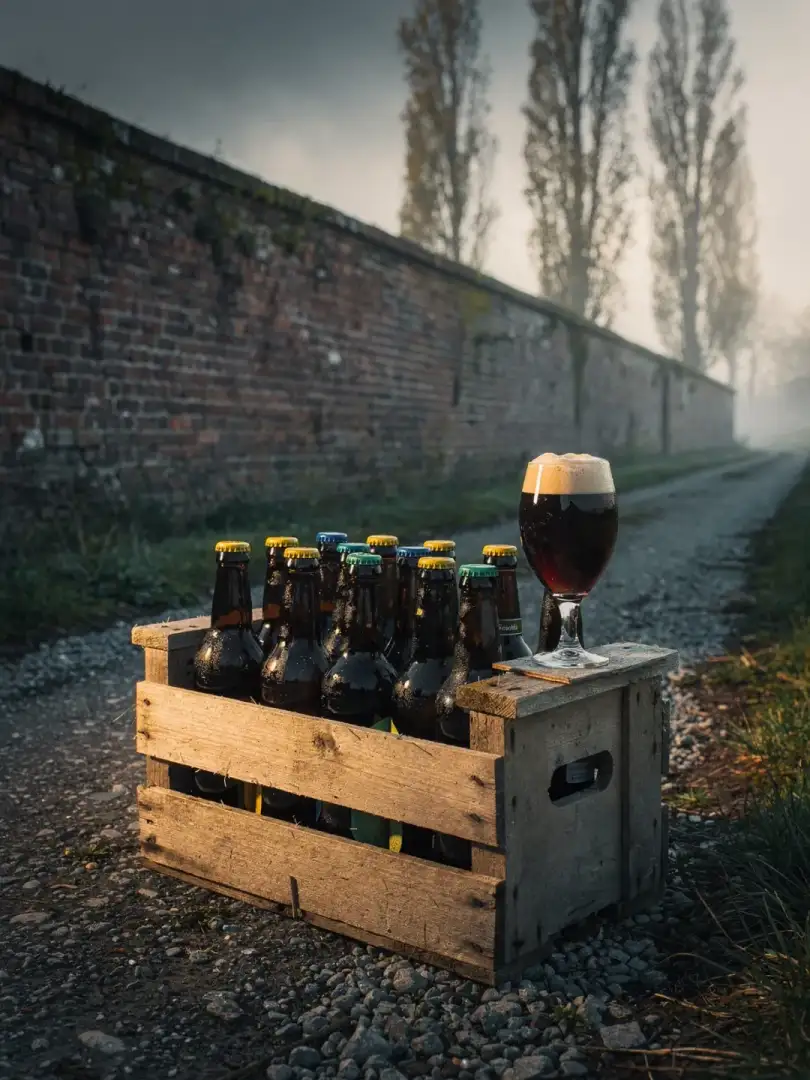
For decades, the bottles carried no label. The styles could only be told apart by the color of the bottle cap: green for Blond, blue for 8, yellow for 12. According to media reports, the abbey introduced labels for the first time in 2022. All three beers undergo bottle conditioning and form a yeast sediment that should stay in the bottle when pouring.
These beers are best enjoyed not too cold, from a chalice-style glass. The 12 unfolds its fruit aromas at around twelve degrees Celsius. Anyone who can't get hold of Westvleteren isn't missing out on a unique style. Dark strong ales from other Trappist and abbey breweries offer a similar experience, and comparing several bottles teaches you more than chasing after a single one.