Step by step
Tasting beer like a beer sommelier
Tasting beer means examining a beer deliberately in fixed steps: looking, smelling, tasting, and reflecting on the finish. Anyone who follows this approach recognizes why a Pils tastes different from a Helles, and can put that difference into words. A quiet room and a clean glass are all it takes.
How do you taste beer? Drinking and judging are two different things
At the end of a long day, all that matters is whether a beer tastes good. In a tasting, what matters is why it tastes that way. The difference lies in attention: you take small sips, give yourself time, and separate impressions that would otherwise blend into a single feeling. 'Delicious' then becomes 'bread crust, a touch of honey, firm bitterness, dry finish.'
This approach comes from sensory science, the discipline of evaluating products with the senses that breweries use daily for quality control. Beer sommeliers have adapted it for guests and enthusiasts. The goal isn't a verdict of good or bad, but a description that another person can follow and understand.
The benchmark matters. A beer is judged against its style, not against your personal favorite. A Helles is allowed to be mild and malty. A German Pils, on the other hand, should come across noticeably more bitter. The BJCP style guidelines, a US reference for beer competitions, list 16 to 22 bitterness units for Helles and 22 to 40 for German Pils. Knowing this lets you judge both fairly.
Preparation: room, glass, and the order of the beers
Odors in the room skew every sample. Perfume, smoke, or food smells have no place at a tasting. The glass should be free of detergent residue and grease, or the foam will collapse. A stemmed glass with a slightly tapered opening works well, as it concentrates the aromas. Which glass suits which style is a topic of its own.
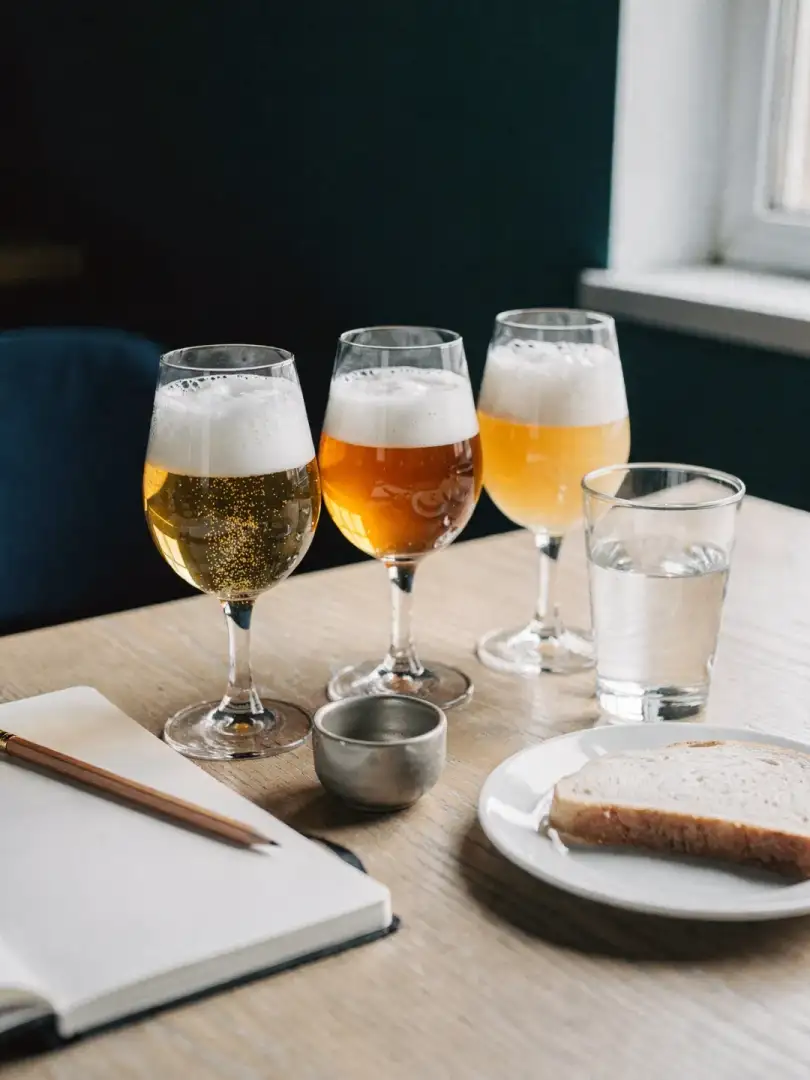
Several beers are tasted in a sensible sequence. Light beers come before strong ones, lightly hopped before very bitter ones, clean beers before sour or smoky ones. Start with a smoked beer, and you'll barely taste anything in a Helles afterward. Still water and a piece of neutral bread help between samples.
The quantity stays small. A few sips are enough for a sample, and with many beers it's fine to spit them out. That's standard practice in professional tasting panels and keeps the mind clear. Staying sober means you can judge the tenth beer just as precisely as the first.
The five steps of beer tasting at a glance
The eye comes first. Color, clarity, and foam reveal a lot about malt, yeast, and freshness before you've taken a single sip. Next comes the nose. Swirl the glass gently and smell in short bursts, since the sense of smell quickly adapts to an odor.
Only then is it time to drink. The sip should travel across the whole mouth, so the tip of the tongue, the sides, and the palate are all involved. After that, pay attention to the mouthfeel: body, carbonation, and warmth from alcohol. Finally comes the finish, the impression that lingers after swallowing, such as a long bitterness or a short, dry note.
A small trick helps with tasting. Exhaling through the nose after swallowing sends aromas up into the olfactory passage from behind. Experts call this retronasal smelling. Many notes that were missed before only emerge at this moment.
Taking notes: how do you describe the taste of beer?
Without notes, impressions blur after three beers. A simple grid with the fields appearance, aroma, taste, mouthfeel, and overall impression has proven useful. Comparisons from the kitchen help: bread, biscuit, caramel, coffee, lemon, hay, pepper. Everyone understands words like these.
Honesty is the hardest part. The label, price, and reputation of a brewery influence judgment more than you'd think. That's why professionals often taste blind, without knowing which beer is in the glass. Even a simple blind tasting among friends shows how hard it is to recognize your own favorite Pils.