Ninety Days of Rest
Yeast & Fermentation
Is Budweiser beer top-fermented or bottom-fermented? It's bottom-fermented, like almost all Czech beers from Budweis. The yeast works cool and sinks to the bottom at the end of fermentation, unlike top-fermenting yeast, which floats on the surface and produces more fruity aromas at warmer temperatures.
Lager yeast is a hybrid of two yeast species, Saccharomyces cerevisiae and Saccharomyces eubayanus. It copes with cold that would paralyze other yeasts. Primary fermentation with this type usually takes place at a few degrees above freezing up to about ten degrees Celsius, and lasts from days to weeks.
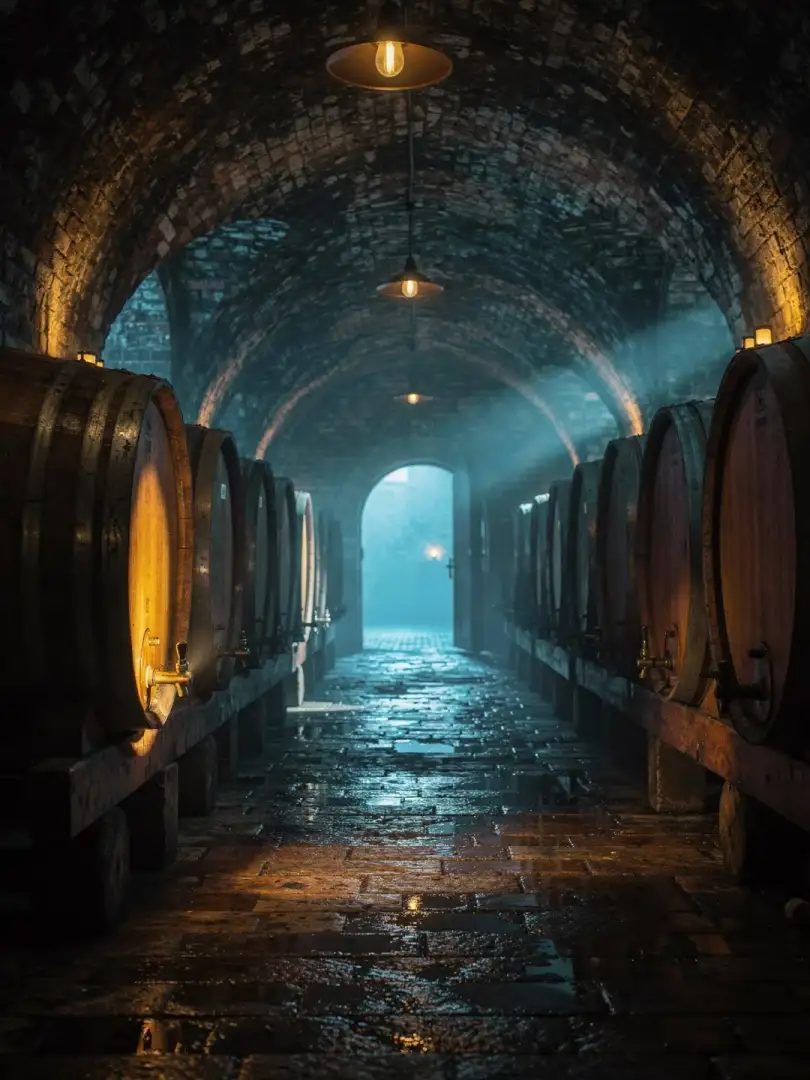
Maturation follows, and this is where Budweis sets itself apart from many breweries. Budějovický Budvar states a lagering period of 90 days for its pale lager—considerably longer than for most mass-market beers. During this time, the yeast breaks down by-products, the beer clears, and carbon dioxide becomes bound into the beer.
The result tastes smooth. It carries less sharpness in the bitterness and fewer fruity esters than an ale. The difference between Budweiser lager and an ale, then, lies chiefly in temperature and time, not in the recipe. That's precisely why a good lager rests on so little—and why any flaw shows up immediately.
The smaller breweries in the region also work bottom-fermented. The Samson brewery in České Budějovice likewise lagers its beers in cold storage. How long each brewery lets its beer mature is up to them; the Czech classification into ten-, eleven- and twelve-degree beers says nothing about maturation time.