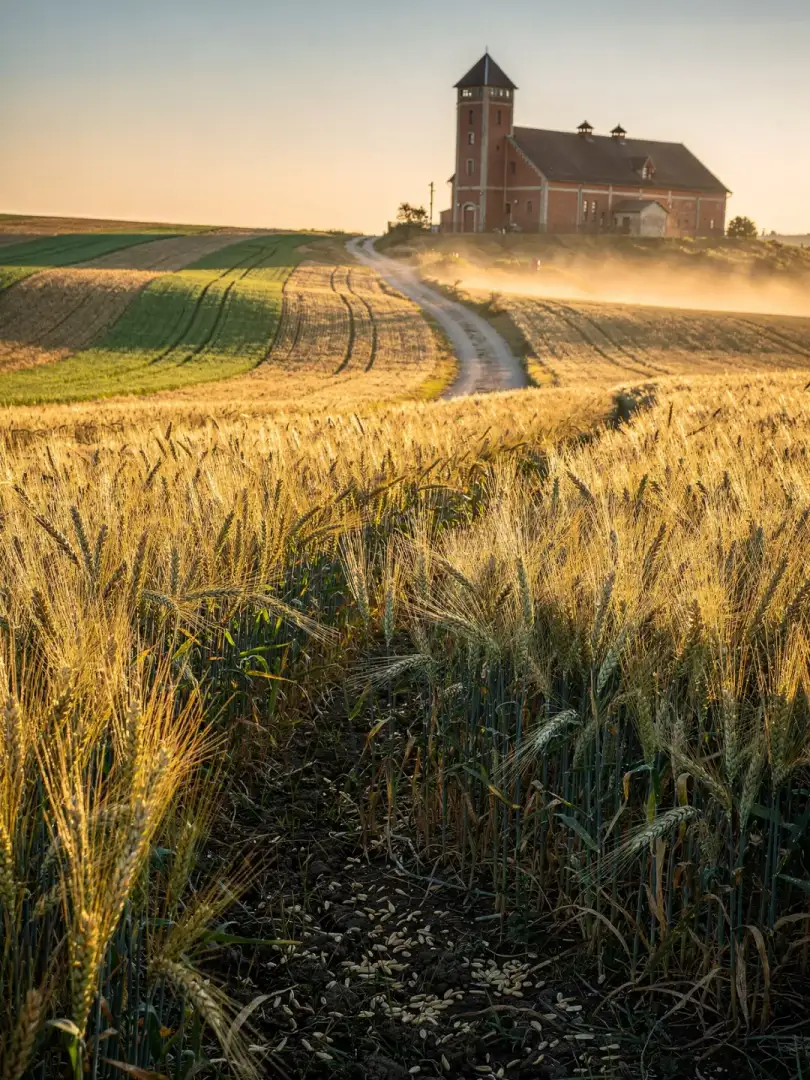
Moravian Barley
Malt & Grain
Pale malt is the backbone of Budweiser beer. Budějovický Budvar states it uses Moravian barley malt, meaning the barley comes from the east of the country, not from South Bohemia. Malting means letting the grain germinate in moist warmth and then drying it; only this process makes the starch in the grain usable for the brewer.
For a pale lager, the malt is kilned, meaning dried, at a low temperature. This keeps it pale and gives it the taste of fresh bread, biscuit and a hint of honey. Czech brewers traditionally use spring barley, sown in spring, which has a low protein content.
When mashing—soaking the crushed grain in warm water—many Czech breweries rely on decoction. Part of the mash is drawn off, boiled, and returned to the rest. This gives the beer greater malt depth and a slightly sweet, rounded character. The extra effort pays off for pale lager, which would otherwise taste thin.
The dark counterpart needs different malts. Samson's dark lager adds roasted and caramel malts. These bring roast aroma, cocoa and bread crust to the glass without making the beer heavy. A Tmavý ležák, as the Czechs call dark lager, therefore tastes more of bread and cocoa than of coffee.
In the end, kilning decides how pale or dark a beer becomes. A Světlý ležák, a pale lager, starts with pale Pilsner malt. In the Budweis basin, that means plenty of bread crust on the nose, little roast aroma, and a beer that stays clear and golden, like summer straw.