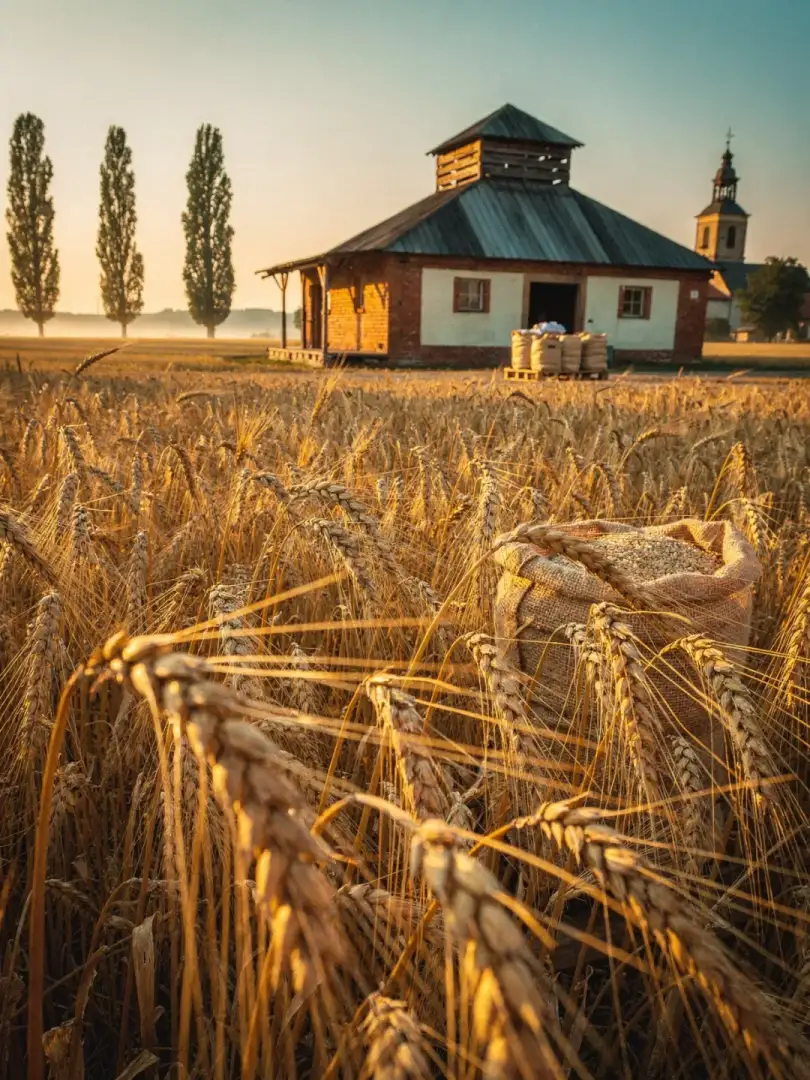
Haná Barley
Malt & Grain
What is Haná barley, and why is it well known? It's malting barley from the plain around Olomouc, and the name has long stood for consistent quality. The Moravian Haná landrace is considered the ancestral strain behind many later malting barleys.
Barley becomes malt when the grains are moistened, allowed to germinate, and then dried on a kiln. This process creates sugars and enzymes that later break down starch in the brewhouse. How pale or dark the finished malt turns out depends on how hot and how long it's kilned.
Moravia was a hub of this craft. In Prostějov, the Winter brothers ran a malthouse starting in 1800, and Olomouc-Holice was home to one of the country's largest malthouses. The Hanácký pivovar in Holice, the Haná region's own brewery, has since closed as well.
In Prostějov, a plant belonging to the Soufflet group still malts Haná barley. The Czech line runs pale: Pilsner malt, gently kilned, gives lagers their golden color and bread-like flavor. Dark beers add roasted and caramel malts, kilned at higher temperatures, lending the beer color, roasted notes, and a touch of sweetness. How much malt a beer carries ultimately shows up in its original gravity—the sugar content of the wort before fermentation.
When mashing—steeping the malt in warm water—Czech brewers traditionally rely on decoction. Part of the mash is boiled separately and then returned to the mix. This produces the round, slightly sweet malt character found in Bohemian and Moravian lagers alike.