Reservoir & Black Earth
Water & Soil
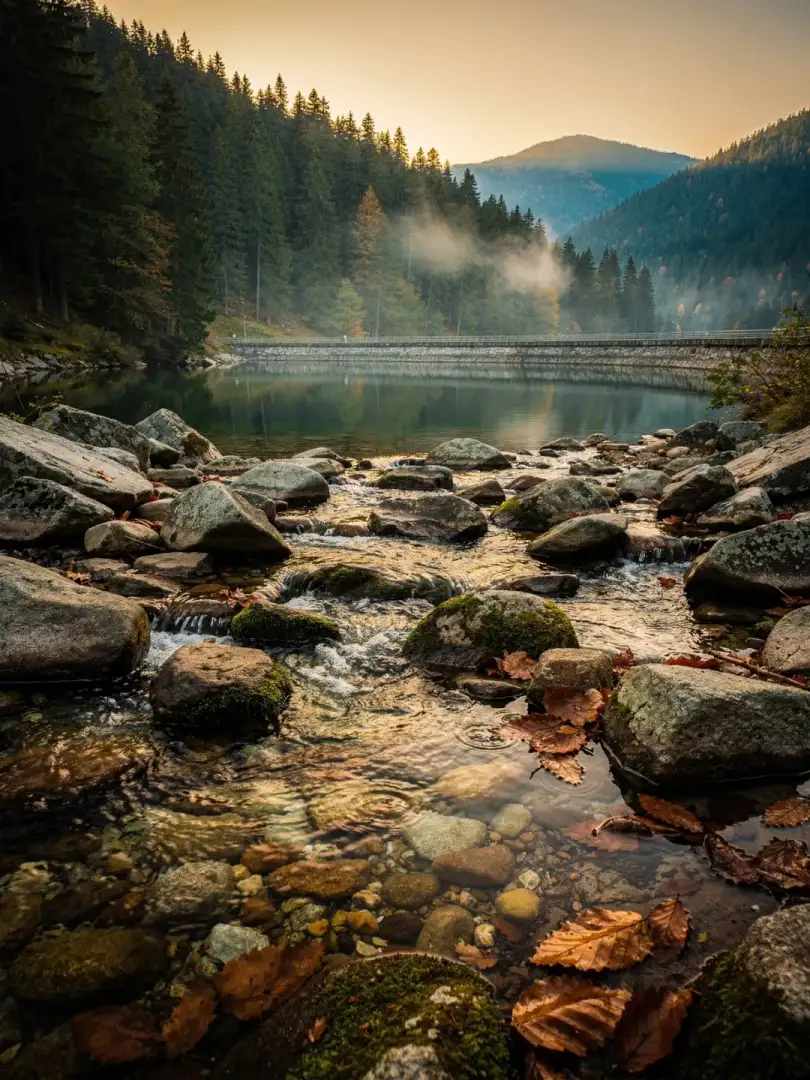
Where does North Moravia's brewing water come from? For Nošovice, the site was specifically chosen for its proximity to the Morávka mountain reservoir in the Beskids. The water collects in the mountains and flows down to the plant. The brewery doesn't disclose the exact water hardness, so no figure is given here. However, water from mountain reservoirs is typically low in minerals, making it well suited for the pale lagers brewed in Nošovice.
Brewing water shapes every lager. The fewer minerals it contains, the softer the hop bitterness comes across and the more clearly the malt shines through. Hard water makes that same bitterness sharper, which is why breweries treat their water until it suits the style.
The Haná region is a different world altogether. It lies in the upper valley of the Morava River, roughly between Vyškov, Holešov, and Litovel, and is considered one of the most fertile agricultural landscapes in Czechia. Wheat, barley, sugar beets, rapeseed, and hops all thrive here.
Good soil is really the North's core raw material. Where grain ripens so reliably, large malthouses spring up, and where malthouses stand, breweries follow close behind. This link between farming and the brewer's craft explains why Litovel was founded in 1893 together with its own malthouse.
The climate is continental: cold winters, warm summers, and meltwater flowing down from the Beskids and the Sudetes in spring. Today, lagering mostly happens in modern tanks. For a bottom-fermented beer, brewers in this region need one thing above all: steady cold held for weeks on end.