Soft and Cool
Water & Soil
Why does Pilsner Urquell taste so rounded despite being bitter? One reason lies in the water. The brewing water in Plzeň is known to be very soft and low in dissolved minerals. Many precise figures circulate, but they come from different periods and contradict one another, so we won't cite specific numbers here.
What soft water does in the glass is easy to describe. The hops come across more refined, the bitterness cuts through cleanly without scratching the throat. Very hard water would make the same amount of hops taste sharper and rougher. For a pale, hop-forward beer, the water in Pilsen was therefore a stroke of luck that the city's brewers recognized and preserved early on.
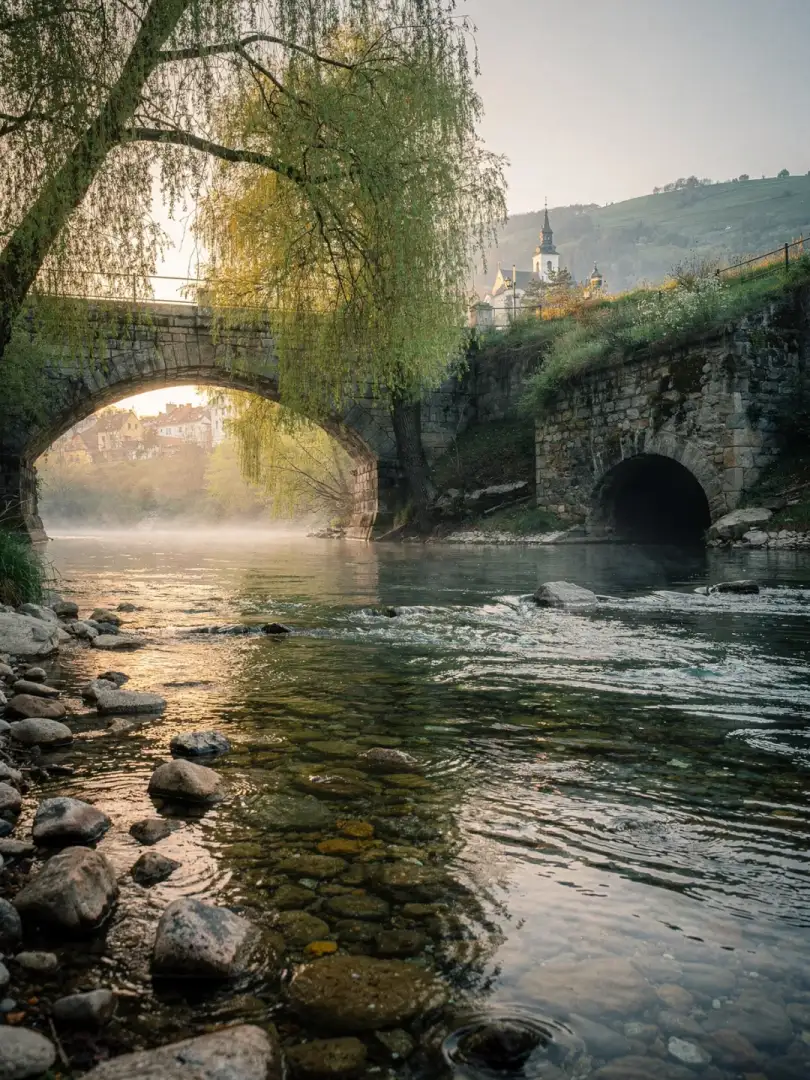
The city lies where several rivers converge. The Mže, Radbuza, Úhlava, and Úslava join together near Plzeň to form the Berounka. The surrounding land is flat to gently rolling, so the brewers of Plzeň could dig their cellars straight into the ground beneath the city. Water and cold were thus both right at the brewers' doorstep.
These cellar tunnels beneath the brewery run for miles. They mattered because the temperature there stays cool year-round. Before refrigeration existed, the underground kept the beer at the low temperature that bottom-fermenting yeast needs.
Today almost all breweries treat their water, either softening it or adding salts. Still, for Pilsner Urquell, Gambrinus, and Czech brewers in general, the soft Pilsner water has remained the benchmark against which they measure their beers.