Moravian Barley
Malt & Grain
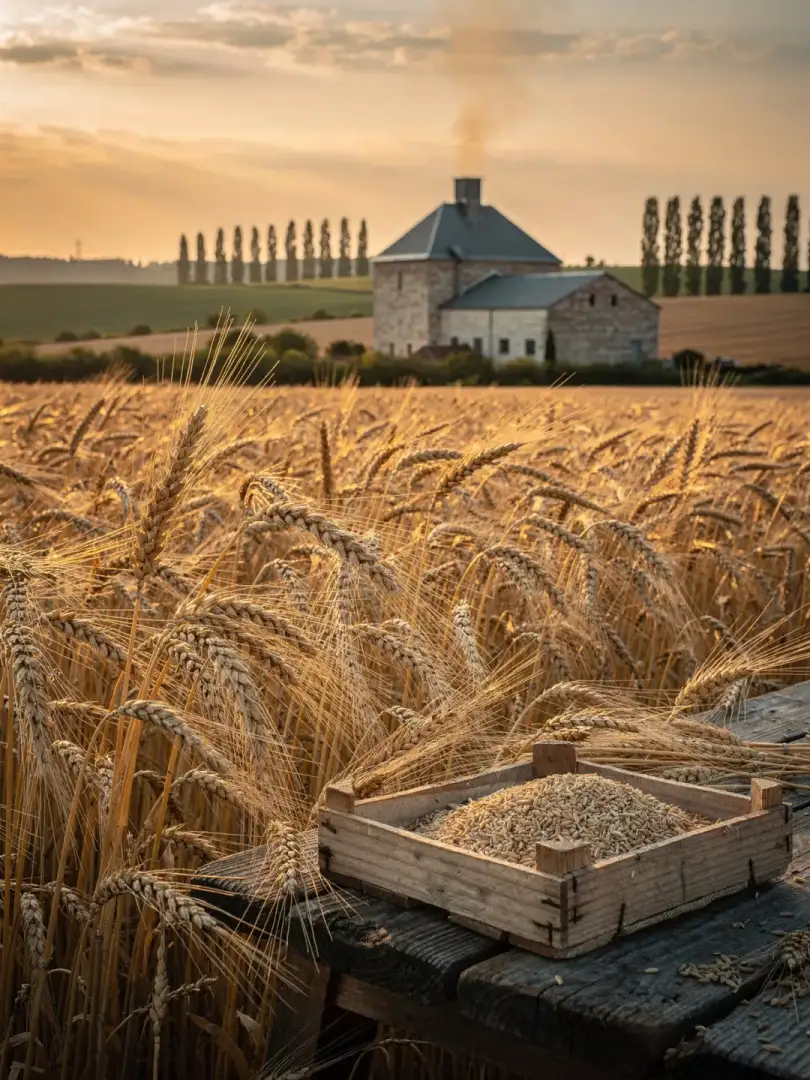
Pilsner Urquell is made from barley malt. According to the brewery, it comes from Moravian barley low in protein. This matters for appearance, since low-protein malt yields a beer that clarifies easily without much effort.
Malting barley means letting it germinate and then stopping germination so the grains can convert starch into fermentable sugar. The grain is then dried in a kiln. For Pilsner malt, kilning is done with indirectly heated air, keeping the grains pale and giving them almost no roasted notes.
The fact that Pilsen turned out so pale also has to do with this technique. Every brewer before Josef Groll knew dark malt, whose color often came from smoke or the kiln's direct fire. Pale kilning was an innovation, and it's what still gives Pils its straw-gold color today.
In the brewhouse, mashing comes next. The mash is the warm mixture of milled malt and water. According to the brewery, Pilsner Urquell is produced using a triple decoction method, in which a portion of the mash is drawn off, boiled, and returned to the main mash three times. This takes time and energy, but it gives the beer body and a subtle background sweetness.
Tasters usually describe the malt aromas of a beer from Plzeň as bread crust and honey. This acts as a counterpoint to the hop bitterness, without the beer ever tasting sweet in the end. It's precisely this balance that makes it so appealing.