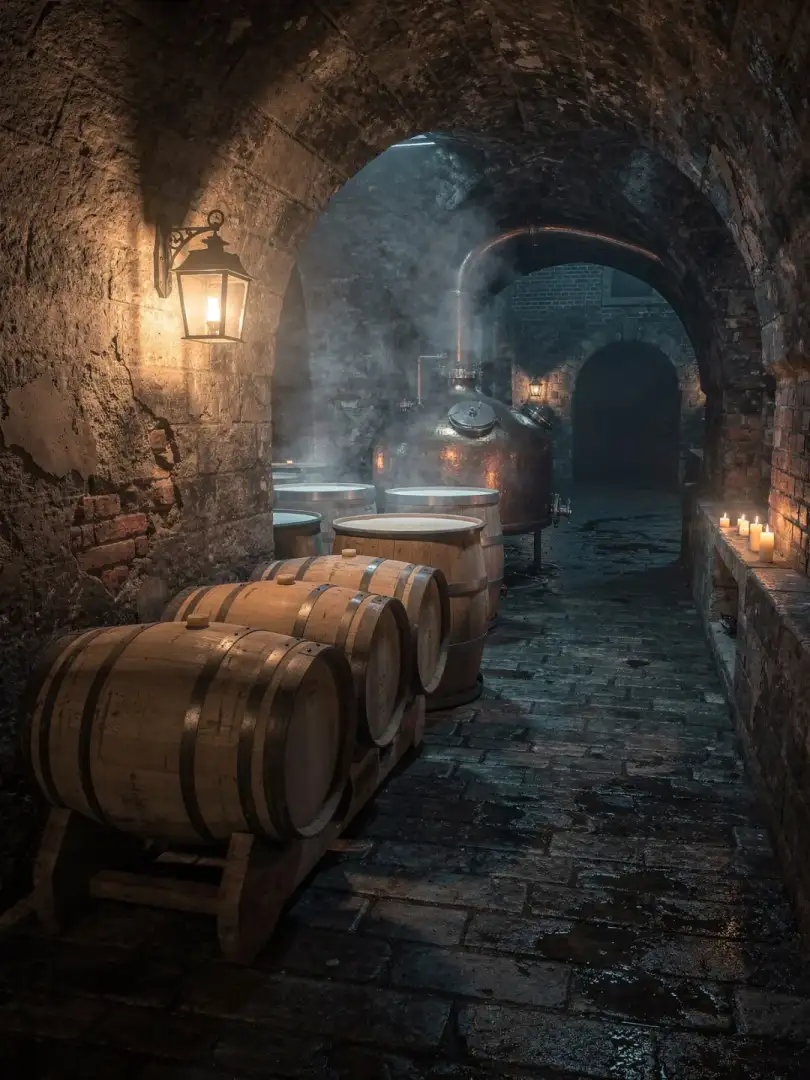
Bottom-fermented, wooden cask
Yeast & Fermentation
A Prague beer in the glass is almost always bottom-fermented. This means the yeast works at low temperatures of about 8 to 12 degrees Celsius and eventually settles at the bottom of the fermentation vessel. The result is a clean, calm beer without the fruity side notes that top-fermenting yeasts produce.
Without lagering, such a beer would be unfinished. The Czech word "ležák" comes from "ležet," to lie, and that's exactly what it means: after primary fermentation, the beer lies cold in the cellar for weeks. During this time, yeast and sediment settle, the beer clarifies, and the carbonation binds finely into the beer.
In the Czech Republic, beers are traditionally classified by their original gravity, expressed in degrees. "Výčepní" goes up to about 10 degrees, "Ležák" sits at 11 and 12 degrees, and "Speciální" beers start at 13 degrees. This number appears on many taps and menus and indicates how much dissolved malt sugar was in the wort, not how much alcohol is in the beer.
How fermentation proceeds varies from house to house. The U Medvídků brewery ferments in wooden casks, according to its own account, and its Oldgott, with 13 percent original gravity and 5.2 percent alcohol, remains unfiltered. The Strahov Monastery Brewery, by contrast, brews in a historic building that regained its taprooms after reopening in 2000.
At large operations like Staropramen, fermentation and lagering take place in stainless steel tanks with controlled temperature. The advantage is consistency; the drawback is that the beer has less individual character. Anyone wanting to taste the difference will find both approaches side by side within a small area of Prague.