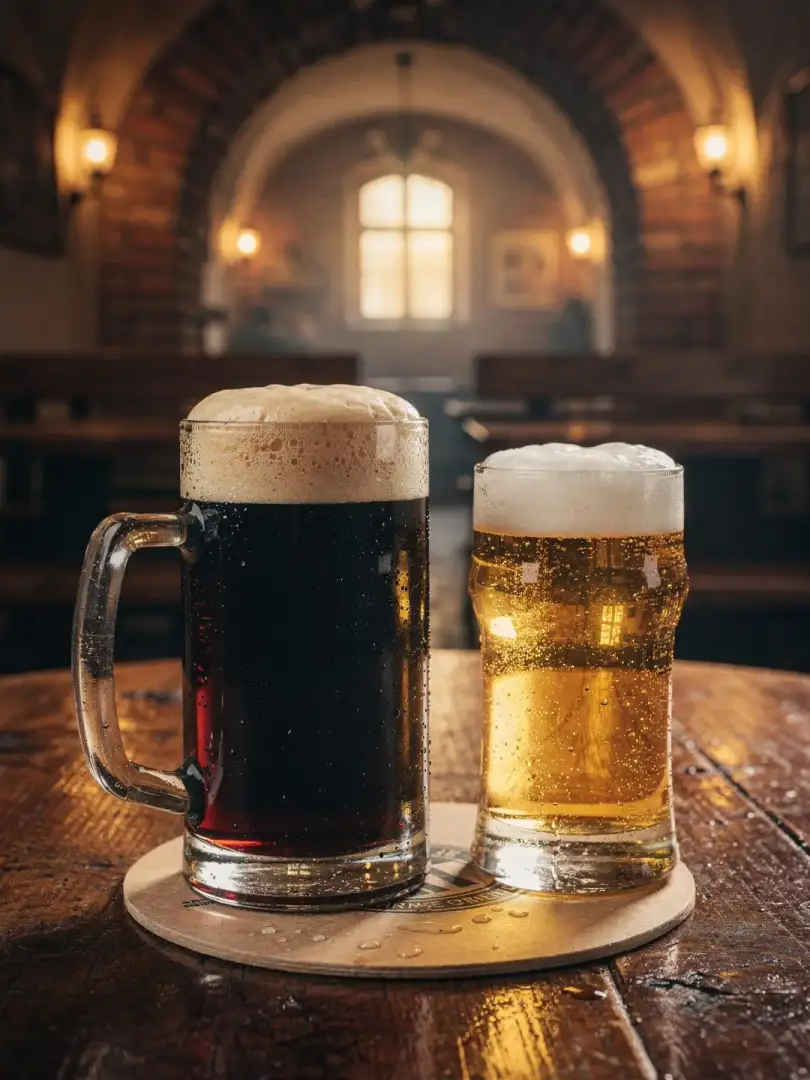
Tmavý and Světlý
Beer Styles
What distinguishes Czech dark lager from Munich Dunkel? Both are bottom-fermented and brown, yet the Prague beer is usually softer, less roasty and drier in the finish. At U Fleků, you drink the Flekovský Tmavý Ležák 13°, a beer with an almost black color and a sweetness reminiscent of caramel and bread.
According to the house, brewmaster Bedřich Pštross brewed the dark lager in 1830 following a recipe said to remain unchanged to this day. This figure belongs to the house's own history. Today it is the only beer served there.
Alongside the dark lager stands pale Czech lager, usually called Světlý ležák. It is golden yellow, with a distinct, herbal hop bitterness and a malt base that tastes of fresh bread. The difference from Pilsner from Pilsen lies in nuances, since both belong to the same style family.
In between sits the amber lager, Czech "polotmavé," which Prague cultivates fondly. The Oldgott from U Medvídků is one example: amber-colored, unfiltered, and more reminiscent of a robust Märzen than a classic lager. Such beers show that style boundaries don't always hold firm, and that's exactly what makes them appealing to the curious who want to try all three types side by side.
Staropramen, too, with its pale lager, represents the everyday Prague style. It's golden, lean, and brewed with medium bitterness. Such beers are rarely outliers; rather, they show the city's average. Anyone wanting to understand Prague would do well to start with this unassuming glass and then compare step by step from there.
Czech Dark Lager (Tmavý ležák)bottom-fermented
- Original gravity
- 11–14.7 °P
- Alcohol
- 4.4–5.8 % vol
- Bitterness
- 18–34 IBU
- Colour
- 33–69 EBC
Dark brown, caramel and bread, little roasted bitterness, soft finish.