The Old Malt House
Malt & Grain
Barley is just a supporting player here — hops take centre stage. Still, an old malt house counts among the sights of Žatec: the complex of the Temple of Hops and Beer, in Czech Chrám chmele a piva, includes one of the oldest Renaissance-style malt houses in the Czech Republic. It's a reminder that hops alone don't make beer — malt is needed too.
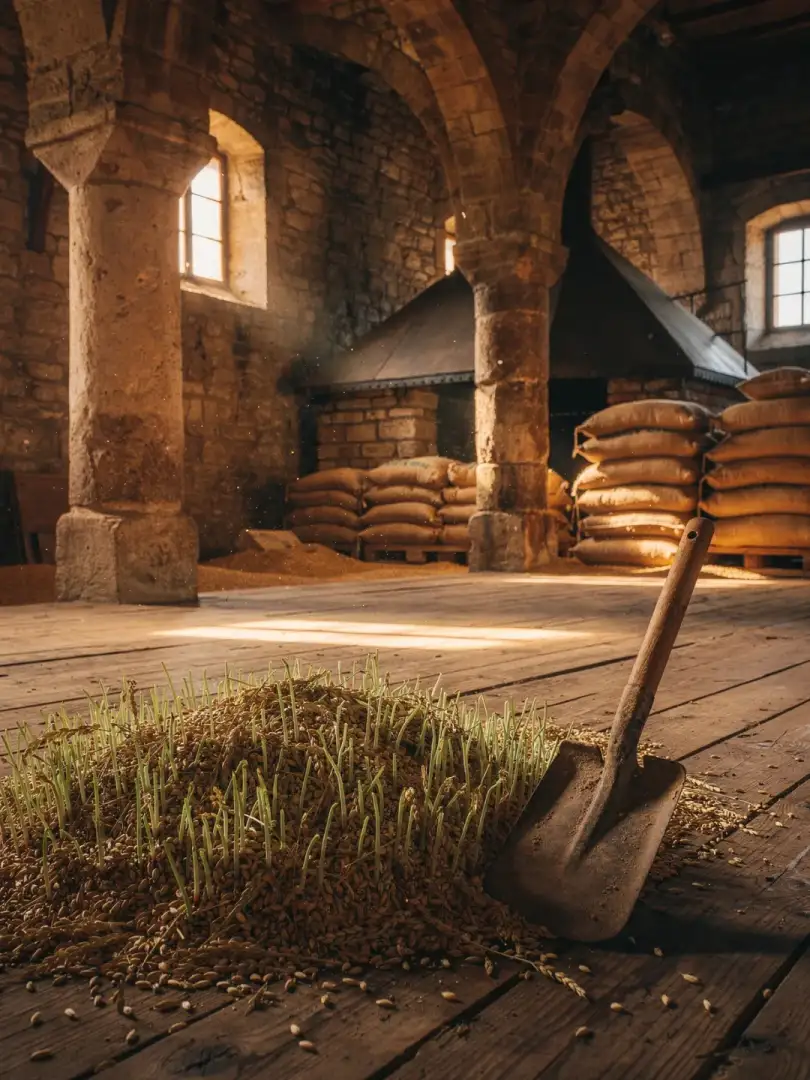
How does barley become malt? The grains are soaked in water and allowed to germinate. In the process, the barley converts starch into sugar, which the yeast will need later. Germination is then halted by drying, a step called kilning. Depending on how hot the kilning is, the result is either pale or dark malt.
For a Bohemian pils, pale Pilsner malt is used. It's kilned gently, tastes of bread crust and a touch of honey, and gives the beer a straw-yellow to golden colour. For beers that fall under the style guidelines for Czech Pale Lager, the colour ranges between 7 and 12 EBC — the unit brewers use to measure colour, with higher numbers meaning darker beer.
Order a dark beer, though, and you get a different picture. Czech Dark Lager calls for darker malt, kilned more intensely, smelling of caramel, bread, and a hint of cocoa. Its colour falls between 33 and 69 EBC, and even here the hops are never an afterthought.
The barley for the malt doesn't have to come from Žatec itself. Maltsters in the region source it from the growing areas of Bohemia and Moravia. What matters most is that the malt tastes clean and mild, so that the Saaz hop character can shine through clearly later on.