Limestone and Cellar
Water & Soil
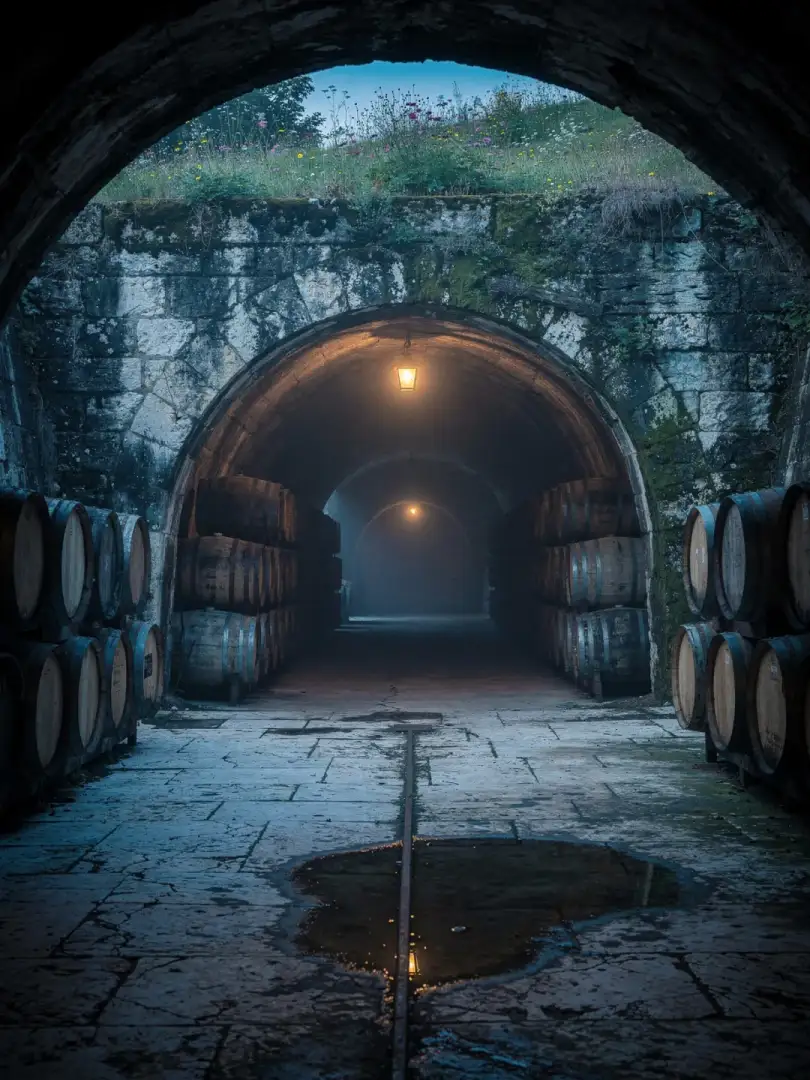
Why does beer age in the rock beneath Kőbánya? Because the limestone under the district balances out heat and cold. Climb into one of the tunnels and you'll feel cool, damp air even in summer—exactly what brewers needed before refrigeration became widespread.
The stone is the legacy of a mining operation. Limestone was quarried here from the 13th century until 1890, when repeated collapses brought the work to an end. The resulting cavities survived as cellars, used by brewers and wine merchants alike for storage. The tunnels form one of the country's largest cellar systems, and the Dreher brewery still uses part of it today.
The brewing water is a less romantic story. Reliable measurements of the historical Kőbánya water don't exist, so we're left with a rule of thumb: groundwater above limestone tends to be hard, and hard, carbonate-rich water emphasizes bitterness in beer and pairs better with darker malts than with very pale ones.
What matters today is something else entirely. Almost all breweries treat their water, stripping out hardness or adding salts as needed until it suits the desired style. The rock of Kőbánya functions less as a water source than as a refrigerator, and the thermal springs Budapest is famous for have nothing to do with the beer anyway.
The city itself sits on the Danube, and its climate of hot summers and cold winters explains why lager cellars were in demand so early on. Where summer heat blankets the plain, a cellar inside the hill is the only place bottom-fermenting beer can mature undisturbed.