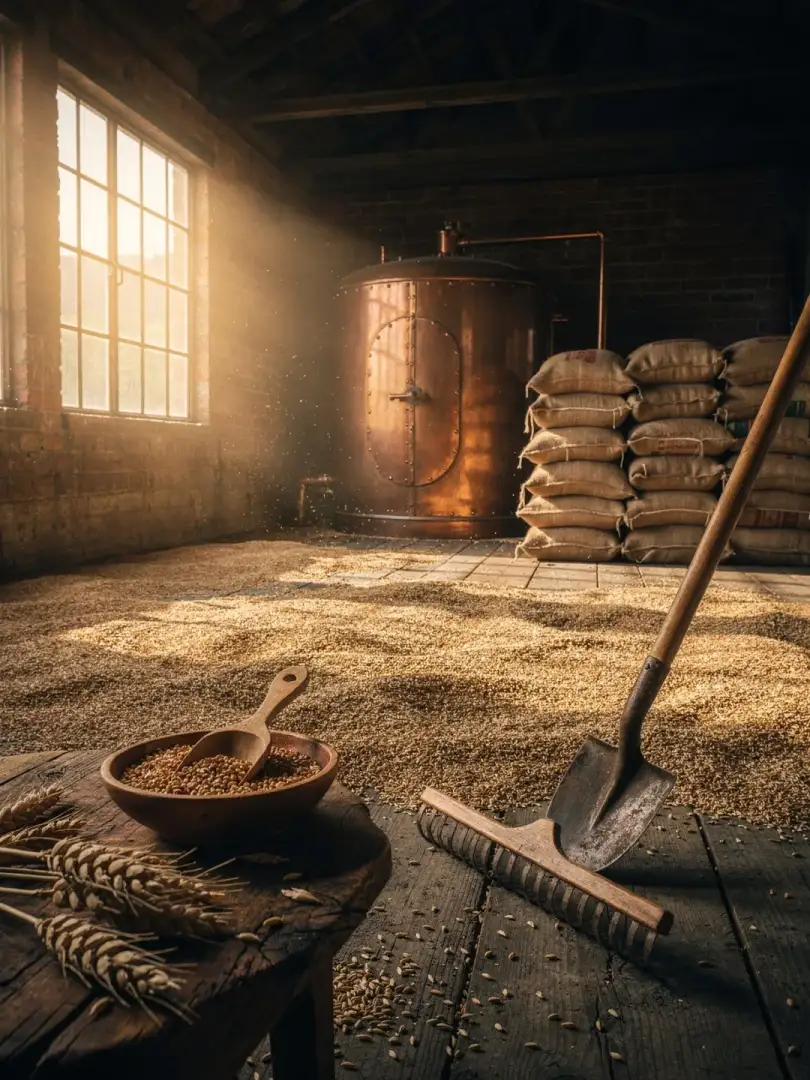
Floor Malting, Riverbend
Malt & Grain
What does Appalachian malt taste like? Find out at Riverbend Malt House, a malthouse in Asheville founded in 2010 by biologist Brent Manning and geologist Brian Simpson. It malts barley, wheat, and rye from regional farms, and according to media reports its malt ends up in nearly every brewery in the city.
At Riverbend, the germinating grain lies flat on the floor and is turned by hand. This process is called floor malting. It's labor-intensive and slower than germination in large drums, but it keeps the grain close to the maltster's hand throughout. Malt is made when barley germinates briefly and is then dried, making the starch in the grain usable for brewing.
Even the big players think regionally. When Sierra Nevada set up in Mills River, reports say it planned its own rail link for barley deliveries and wanted to make part of the grain available to other brewers. Growing barley in the humid Southeast is demanding, so regional malt remains a niche for now.
Highland's Gaelic Ale, on the lineup since 1994, is a Scottish-style ale. According to a brewery profile, it's made with Maris Otter, an English winter barley bred in 1965/66 and considered a classic for British ales, along with roasted barley.
An American pale ale usually just needs a pale base malt with a touch of caramel malt. Caramel malt is heated while wet, caramelizing the malt sugar, which gives the beer color, sweetness, and a backbone for the hops to work against.