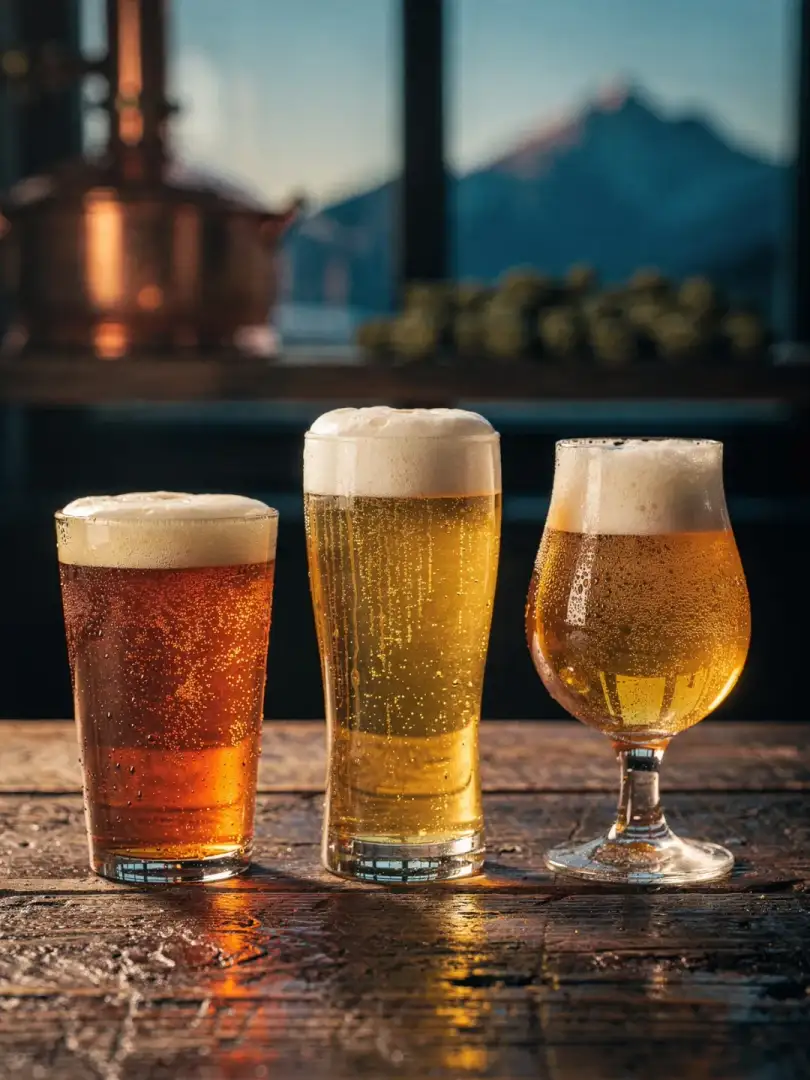
Lager, Pale, Amber
Beer Styles
What is an American lager? It's a pale yellow, bottom-fermented beer with light hop character, high carbonation, and a clean, easy-drinking flavor. Coors Banquet belongs to this style, which differs from German pilsner through less bitterness and often corn or rice in the malt bill. It's built as a thirst-quencher, not a flavor experience.
Alongside it stands the American Pale Ale, or APA. Top-fermented, golden to light amber, it shows citrus, floral notes, and resin from American hops. It shares its origins with the IPA, its more heavily hopped sibling, but is milder and easier to drink. The pale ale is considered the style that put the US craft movement on the map.
A third type is amber ale, the category Fat Tire belongs to: copper to amber in color, with malty sweetness, bread crust, and moderate hops. The style sits between lager and pale ale. Since no official guideline exists for it, the table below covers only the two defining styles, lager and pale ale.
The difference between these two benchmark styles lies mainly in hops and fermentation: lager ferments cold and stays understated, while pale ale ferments warm and lets both hops and yeast speak up. In the glass, you can see the difference in color and in the foam, which sits creamier on a pale ale, and in the nose—citrus, pine, or floral notes instead of grain.
These ranges are competition guidelines, not strict recipes, and individual beers may fall outside them. A brand's actual numbers appear on its label.
American Lagerbottom-fermented
- Original gravity
- 10–12.4 °P
- Alcohol
- 4.2–5.3 % vol
- Bitterness
- 8–18 IBU
- Colour
- 4–7 EBC
Pale yellow, crisp, lightly hopped, clean and light on the finish.