Cold, Warm, Wood
Yeast & Fermentation
In Golden, the beer ferments cold. Coors brews lager, which calls for bottom-fermenting yeast that works at low temperatures and settles at the bottom of the tank once fermentation ends. Such yeasts typically ferment around 8 to 12 degrees Celsius, slowly and with little fruit character. The beer then matures for several weeks near freezing—that's called lagering.
In Fort Collins and most craft breweries, it's the reverse. Fat Tire is an ale—top-fermenting, with yeast rising to the surface and working at around 18 to 22 degrees. Warmer fermentation produces secondary aromas described as fruity or slightly spicy. These beers are usually ready faster than lagers.
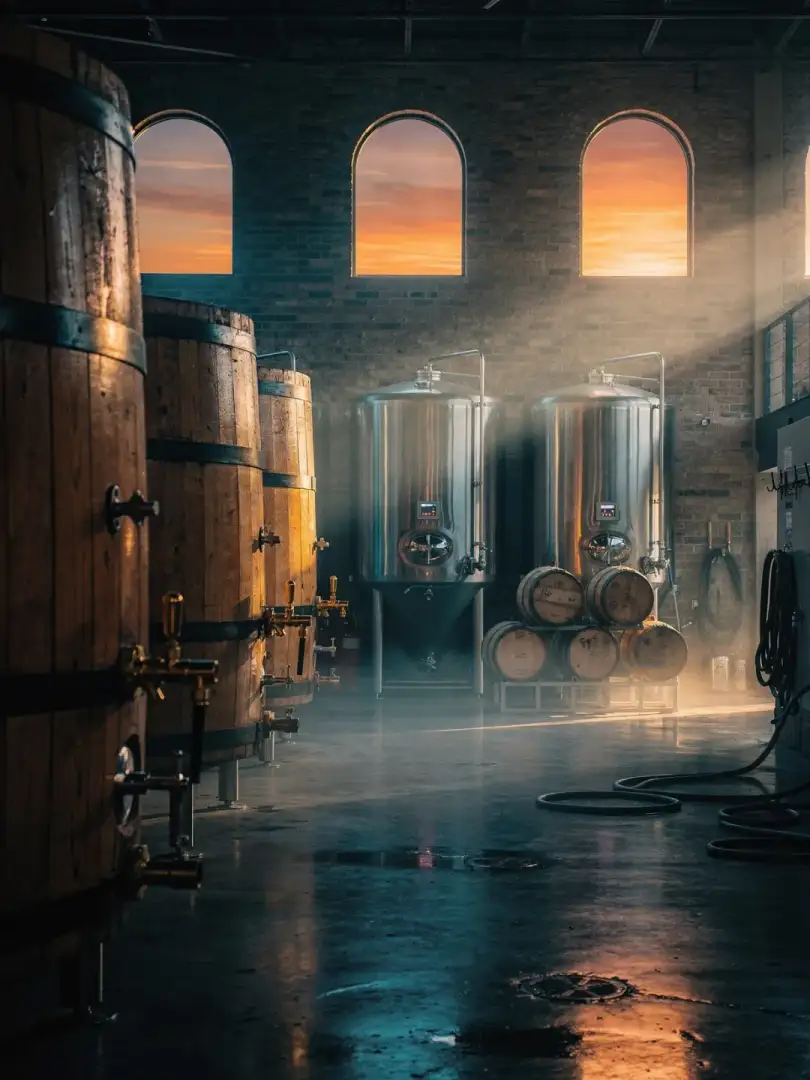
A specialty of New Belgium is wood aging. According to the brewery, it houses a large collection of oak foeders—enormous upright barrels holding several thousand liters each. Inside them, beers like La Folie mature, a sour brown beer in the Belgian tradition. Alongside the yeast, lactic acid bacteria live in the wood and give the beer its tartness.
This kind of maturation takes far longer than in steel tanks, often a year or more. In the end, the brewer blends barrels of different ages until the beer hits the desired flavor.
Colorado thus shows both paths side by side: the cool, large-scale operation making consistent lager, and the craft brewery with warm fermentation and wood aging.