Snowmelt, Mountain Air
Water & Soil
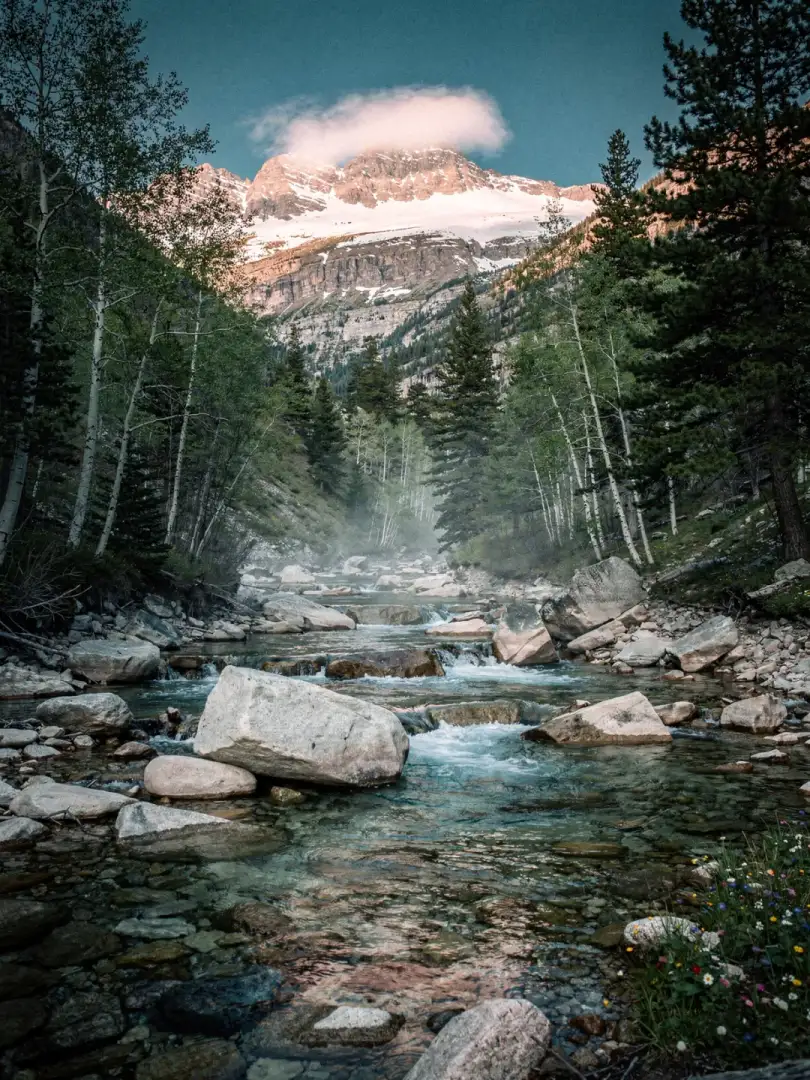
Colorado's brewing water begins as snow. The Rocky Mountains hold onto huge amounts of it through winter, and in spring the melt runs down the slopes in streams and rivers. Clear Creek, by which the Coors brewery stands, comes down from the mountains west of Golden and flows out onto the plain. Over time, Coors rerouted the creek so the plant could draw on its water conveniently.
In Fort Collins, New Belgium sits beside the Cache la Poudre River, which also springs from the mountains. The city sits at roughly 1,500 meters, at the edge of the Front Range, the mountain wall that rises abruptly above the prairie. Beyond it stretch dry plains, with plenty of sun and cold winters.
The altitude has a side effect every brewer knows: Denver sits 1,609 meters above sea level, where water boils at around 95 degrees Celsius instead of 100. That affects boil times and recipes, and anyone brewing from a sea-level guide has to do the math again.
How hard or soft the mountain water is barely matters to the finished beer these days. Nearly every brewery treats its water, stripping out minerals or adding salts according to the recipe. The snowmelt is more of an image than an actual ingredient. Order a pint in Colorado, and you're drinking beer whose water has been dialed in by the brewer.
Aging happens in refrigerated stainless steel tanks, not rock cellars. So the mountains supply the water and the scenery, but not the cellars. One exception is wooden barrels, which some brewers use for special beers—more on that in the yeast section.