Barley, Corn, Caramel
Malt & Grain
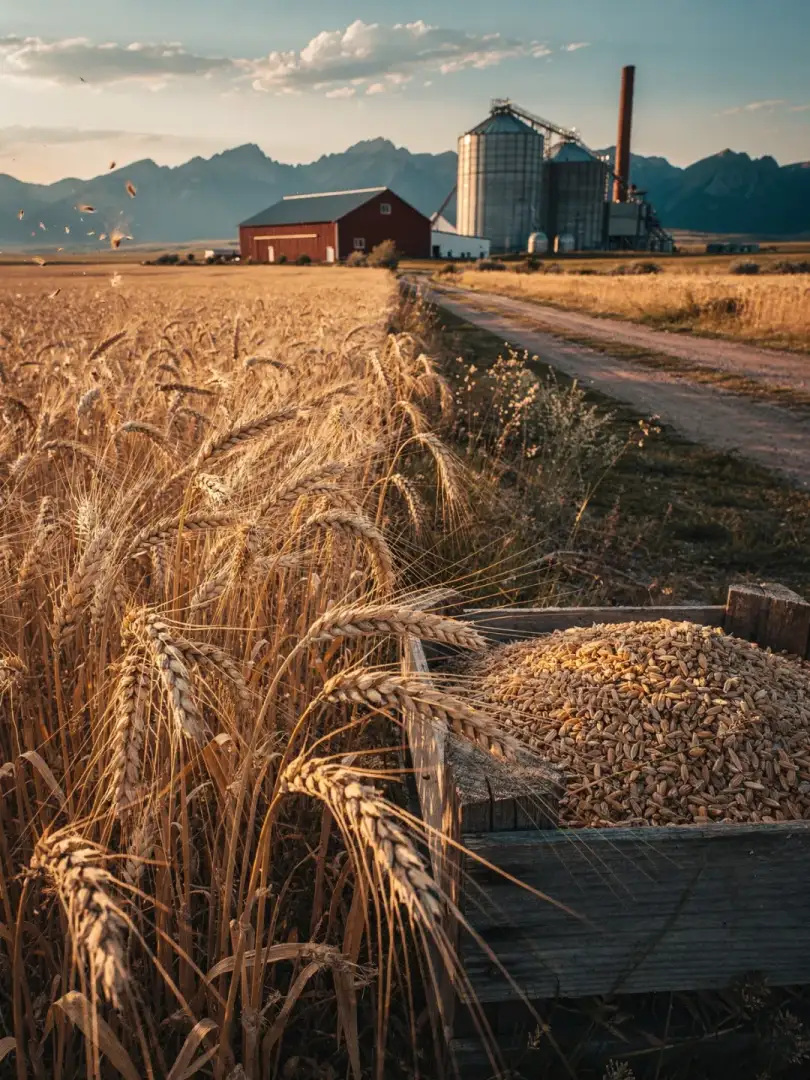
Barley for the region's beer grows in the fields before the mountains. Molson Coors sources brewing barley from contract farmers in Colorado, Idaho, Montana, and Wyoming, and states on its website that a portion of it goes into every Coors Banquet and Coors Light. The farmers supply it, and the brewery malts and brews it.
Malting means soaking grain in water and letting it germinate so it converts starch into fermentable sugar. A kiln then halts the process—a hot-air chamber that dries the grain. The longer and hotter it runs, the darker and sweeter the malt turns out. Pale malt yields the light lager, while caramel and roasted malts produce the amber version.
The difference from German beers lies in the adjuncts. American lager traditionally uses corn or rice alongside barley malt, which contribute sugar but little flavor. That makes the beer paler, lighter, and milder. In Germany, this wouldn't be standard under the Reinheitsgebot, but the US has no such rule.
Craft brewers take a different path. Fat Tire from New Belgium, the brewery's first beer in Fort Collins, is an amber ale—a copper-colored ale with notes of bread crust and caramel. Behind that flavor stand roasted malts that give the beer color and body without weighing it down.
If you want to taste the malt in the glass, try both beers side by side: the lager recalls fresh bread, the amber ale leans toward toast, and the difference comes mainly from the kiln.