Wit, Wild, Ale
Beer Styles
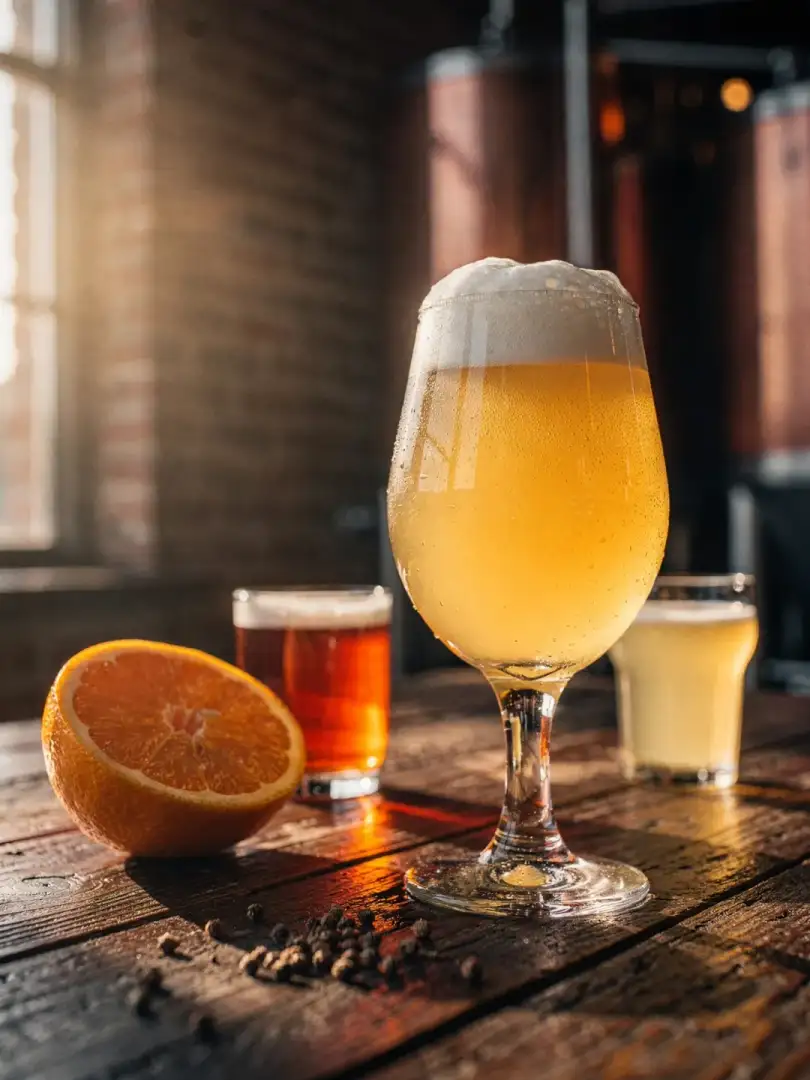
Witbier means 'white beer' from Belgium and should not be confused with Bavarian weissbier. Allagash White is the best-known example from Maine. It's pale yellow, hazy, and light-bodied, with coriander and orange peel and a soft, almost creamy texture from the wheat.
The difference from Bavarian hefeweizen lies in the yeast and the ingredients. Hefeweizen tastes of banana and clove, and spices have no place in it. Witbier, on the other hand, gets its aromas from coriander and orange, with the yeast taking a back seat. Both are top-fermented, but they're aiming for different things. Once you've had both side by side in a glass, you'll never mix them up again: one spicy and fresh, the other fruity and round.
The second face of Allagash is its spontaneously fermented beer. It tastes dry, tart, and often of lemon, apple, and old wood. Carbonation is subtle, sweetness nearly absent. Anyone familiar with lambic will recognize the kinship; anyone who only drinks pilsner will need some time to adjust.
The third line is English-style ales. Geary's Pale Ale and Shipyard Export are examples of this, both hailing from Portland. They're amber to copper in color, malty and easy-drinking, with a hop aroma that leans more toward herbs than citrus fruit.
The data sheet lists the standards for witbier and lambic according to the BJCP 2021 judging guidelines. These are competition ranges, not requirements. Individual beers may fall above or below them, and the exact figures are always listed on the label or the brewery's website.
Witbiertop-fermented
- Original gravity
- 11–12.9 °P
- Alcohol
- 4.5–5.5 % vol
- Bitterness
- 8–20 IBU
- Colour
- 4–8 EBC
Pale yellow, hazy, coriander and orange peel, soft and light.