Granite & Lake Water
Water & Soil
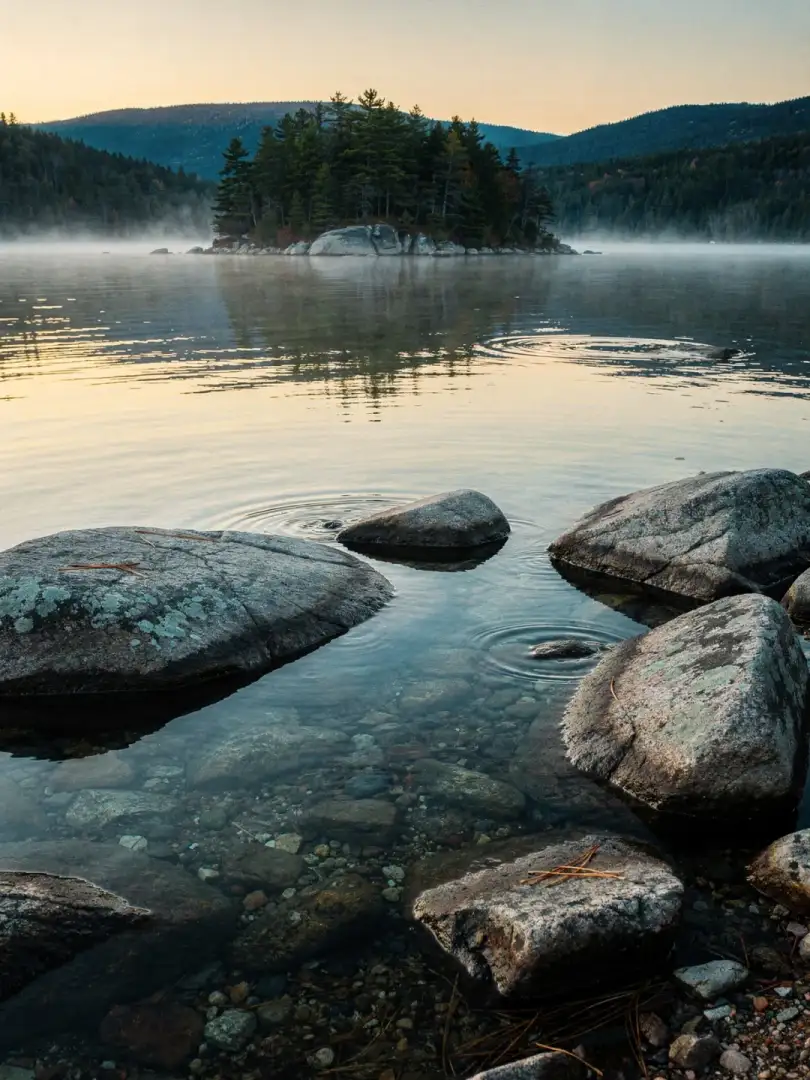
Portland's drinking water comes from Sebago Lake, the largest freshwater lake in southern Maine. The region's water utility classifies it as soft. Soft means it contains very few dissolved calcium and magnesium salts, the minerals that determine hardness. Around the lake lies Sebago granite, a hard, mineral-poor rock that gives up little to the water.
Similarly soft water is found in Pilsen, where it lends pale, hop-forward pilsner its crisp character. The counterpart is Burton upon Trent, with its very hard, sulfate-rich water. There, brewers still add gypsum today if they want to recreate the Burton style. In Portland, by contrast, a brewer is more likely to add minerals than remove them.
That makes for a convenient starting point for a beer like Allagash White. Its spice character of coriander and orange peel isn't meant to compete with hard bitterness from the water. Nearly all breweries treat their water these days anyway, stripping out salts or adding them in. Exactly what values a brewery in the Old Port actually dials in remains part of its recipe.
More than the soil, it's the climate that shapes Maine's beers. Winters along the coast regularly bring nights below freezing. Allagash takes advantage of exactly that cold to chill hot wort outdoors under the open sky. The clear, cold air over Casco Bay is what makes this possible.
The sea is part of the landscape too. The Gulf of Maine is cold, and its waters are home to the lobster that later ends up on the plate alongside the beer. For the beer itself, the saltwater counts for nothing—it stays in the waves outside the brewery door.