Centennial & Co.
Hops
Michigan's most important beer reveals its hops without any guesswork. Bell's Two Hearted Ale, according to the brewery, is hopped exclusively with the Centennial variety. It smells of citrus fruit, grapefruit, and blossoms, and is one of the classic American aroma hops.
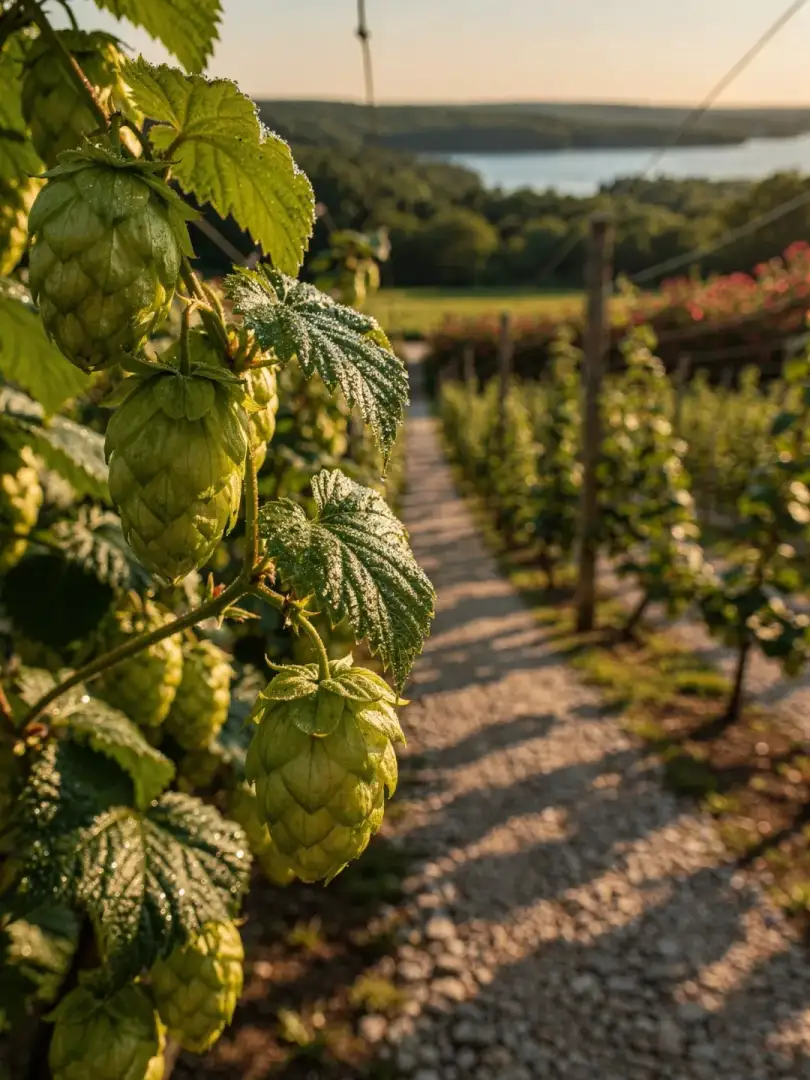
Most of the hops used by Michigan's brewers grow in the western US. In 2025, the US cultivated hops on 17,057 hectares, mainly in the valleys of Washington, Oregon, and Idaho. Typical varieties there include Cascade, Centennial, Citra, Mosaic, and Simcoe. A handful of small farms in Michigan grow their own hop yards, mostly in the northwest of the Lower Peninsula.
Hops deliver two things: bitterness and aroma. Bitterness comes from alpha acids, which only convert into soluble form during the boil in the wort kettle. Measured in IBU (International Bitterness Units), an American IPA ranges from 40 to 70 according to the style guidelines.
Aroma works differently. The later the hops go into the wort, the more essential oils remain in the beer. That's why brewers add a large portion only in the final minutes of the boil, or add hops cold during fermentation in the tank. This is called dry hopping, and it adds aroma without extra bitterness.
Two breweries show the range. Bell's in Kalamazoo sets the tone for Two Hearted with Centennial, while Founders in Grand Rapids takes a more restrained approach with the lighter All Day IPA. How much hop character a beer can handle depends on the malt. Strong hopping on a thin malt base quickly turns harsh, so a bold IPA always needs body behind it.