Cold, Long, Clean
Yeast & Fermentation
When German brewers arrived in Milwaukee, they brought recipes — and yeast — with them. Bottom-fermenting yeast works at low temperatures, usually around 8 to 12 degrees Celsius, and settles at the bottom once fermentation finishes. This gives a clear, clean character without fruity side notes.
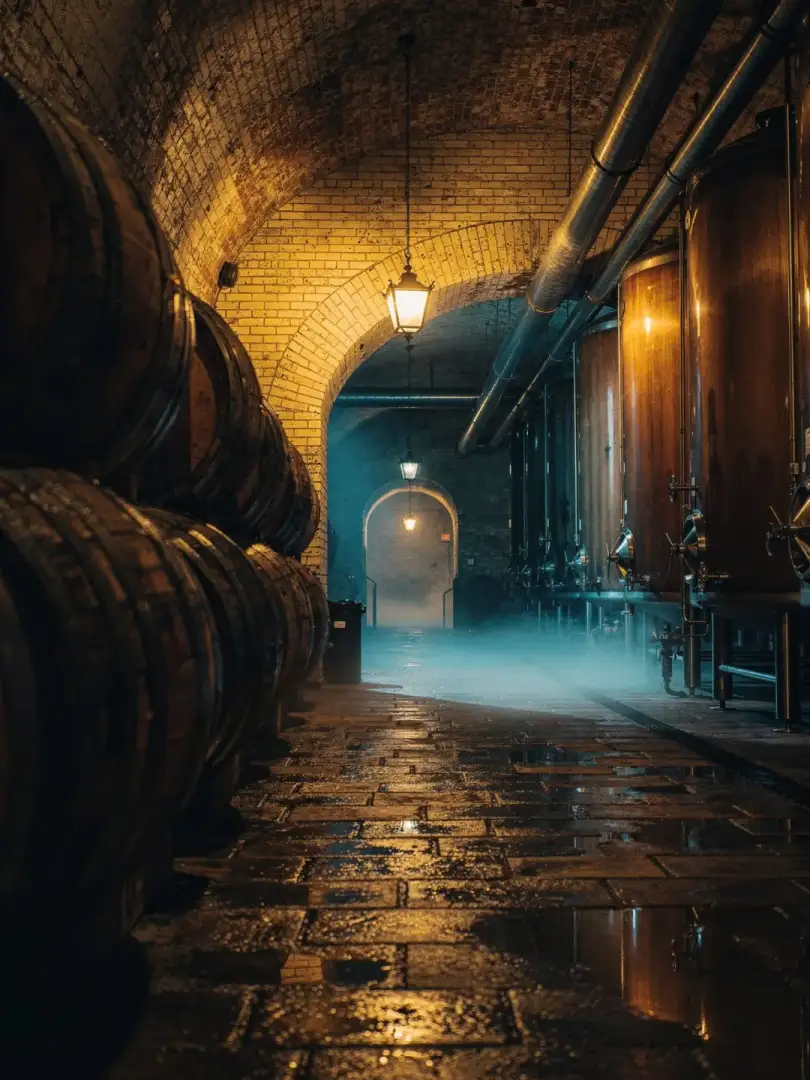
After primary fermentation comes lagering, the process that gave lager its name. The young beer rests for weeks at temperatures around zero to four degrees. During this time it sheds unwanted compounds, clarifies, and turns softer on the palate. This is exactly what the ice cellars of the city on Lake Michigan were built for.
Milwaukee's mastery of this craft on flat land is what made its big breweries big. Consistent cooling could be scaled up: more tanks, more cellars, more beer, the same quality in every season. This advantage over brewers who had to work around warm months explains part of the rise of these brands.
Cream Ale is a special case. The BJCP classifies it as a top-fermented style that American brewers often make with lager yeast or after cold conditioning, to achieve a similarly clean profile. It shows just how fluid the line between ale and lager can be in America.
The yeast itself has its own history. Lager yeast is a hybrid of two species. Its pure culture was first isolated in 1883 at the Carlsberg Laboratory in Copenhagen, though the yeasts Milwaukee's brewers actually worked with came from Bavaria and Bohemia, passed down from batch to batch in their new home.