Barley, Corn, Chilton
Malt & Grain
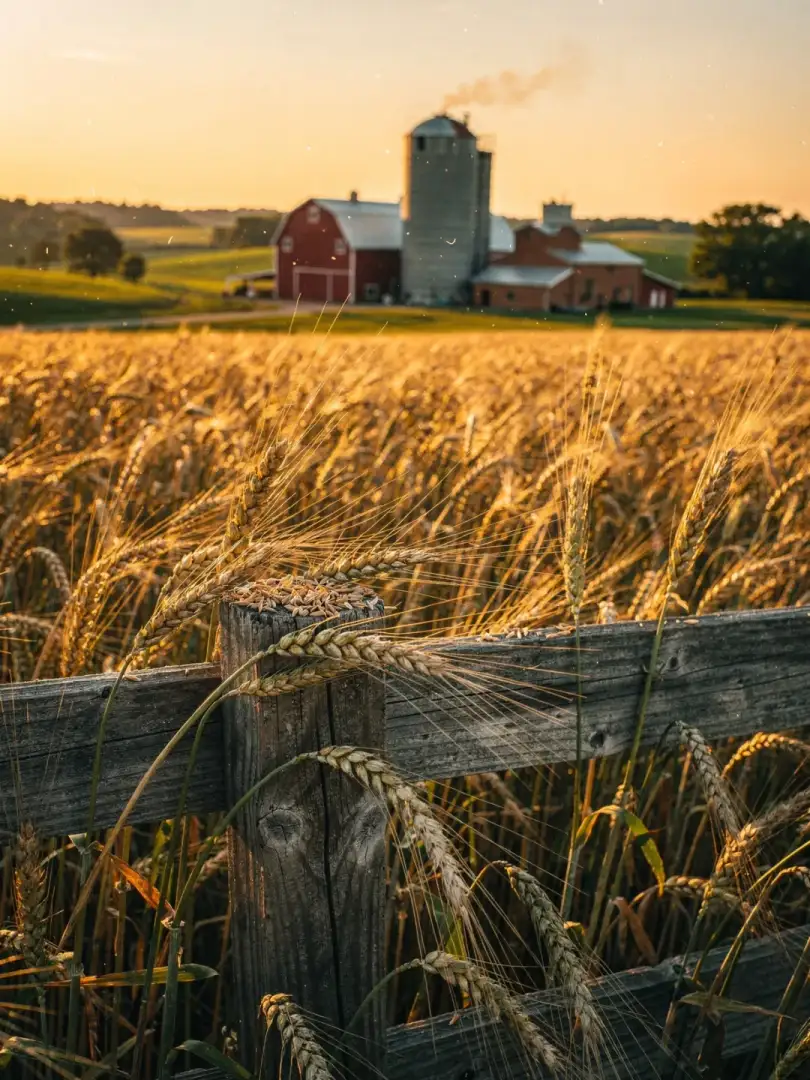
Barley was a staple crop in Wisconsin from the late 19th century until the early 1940s. After that, corn and soy pushed it off the fields. In recent years, small operations have been trying to bring brewing barley back: the number of craft brewers in Wisconsin rose from 73 in 2011 to 138 in 2016, and with it grew interest in locally sourced ingredients.
The malt house in the town of Chilton was founded in 1900 by local businessmen and began operations in 1902. The Briess family bought it in 1978, bringing a craft they'd carried from Moravia, where Ignatus Briess had founded a malting house in 1876. Briess is considered the largest producer of roasted malt in the US.
How does barley become malt? The grain is allowed to germinate so enzymes form, then the process is halted in a kiln, a drying oven. The higher the heat, the darker and more roasted the malt becomes. Milwaukee's pale lagers need only gentle kilning, while amber beers, dark beers and coloring malts require additional roasting.
American lagers are generally lighter in body than German ones. One reason lies in the grain: alongside barley malt, corn or rice is often added to the mash, fermenting out to give a lean, dry character. The BJCP, a US guideline for beer competitions, explicitly names such adjuncts under the American Lager style.
Important for comparison: German law states that bottom-fermented beers may only contain barley malt, hops, yeast and water. This rule doesn't apply in the US, so corn in the mash isn't a shortcut or adulteration — it's a stylistic choice.