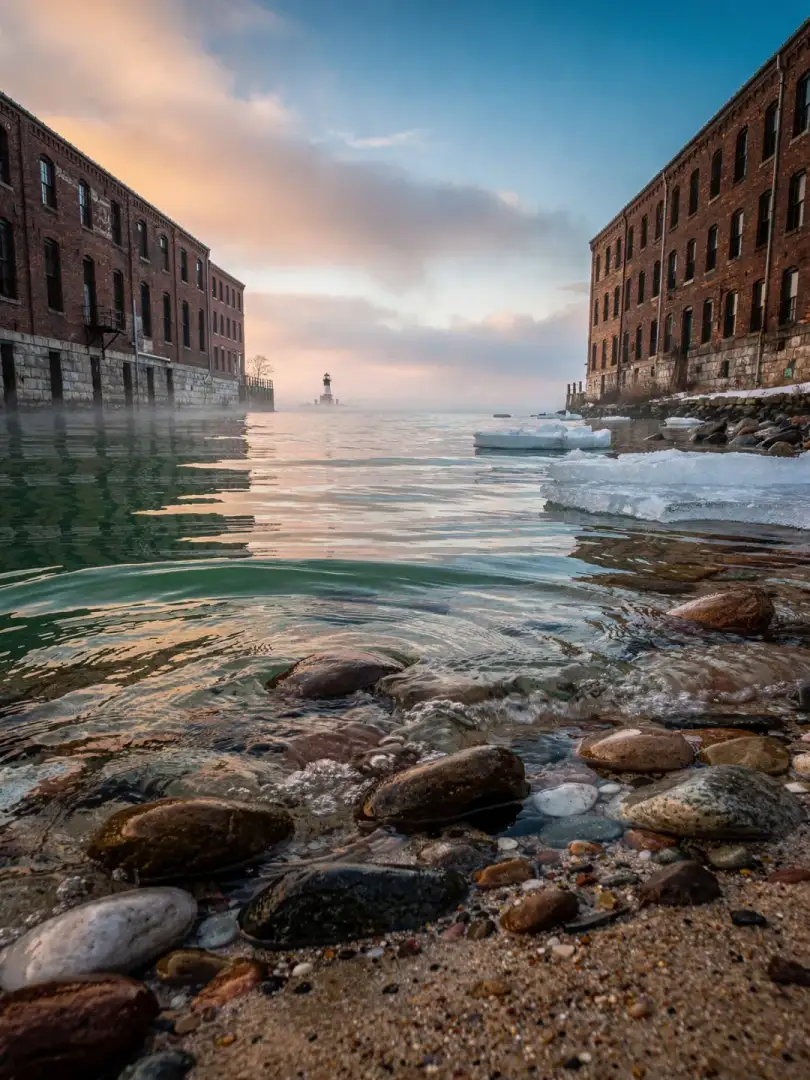
Lake, River, Ice
Water & Soil
Where does Milwaukee's brewing water come from? The city sits on the western shore of Lake Michigan, and its water still supplies Milwaukee today. Three rivers meet the lake here: the Milwaukee, Menomonee and Kinnickinnic. They gave the first brewers both water and transport routes, and carried the wastewater away again.
What this water does to the beer can hardly be measured in numbers today. Almost every brewery treats its water, softening it or adding salts. The old line "the water makes the style" belongs to history now, even in Wisconsin. What mattered for the region's pale, mild lager was simply that the water flowed clean and consistent.
The landscape left behind by the Ice Age shaped everything. The soil around the lake is flat, marked by clay and glacial till. Local clay was fired into pale, yellowish bricks known as "Cream City Brick," used to build breweries and warehouses.
Winter was a raw material for early brewers. Lager needs cold, and Wisconsin had cold months in abundance: ice from river and lake chilled the lagering cellars before refrigeration took over. Anyone wanting to brew a lager here didn't need a mountain cave like in Franconia — the ground and the ice were enough.
That explains why Milwaukee could already brew bottom-fermented beers in great quantity in the 19th century, right in the middle of flat farmland, far from any Bavarian beer town. Nature supplied the cold, the immigrants supplied the know-how.