Catskills, Aquifer, Ice
Water & Soil
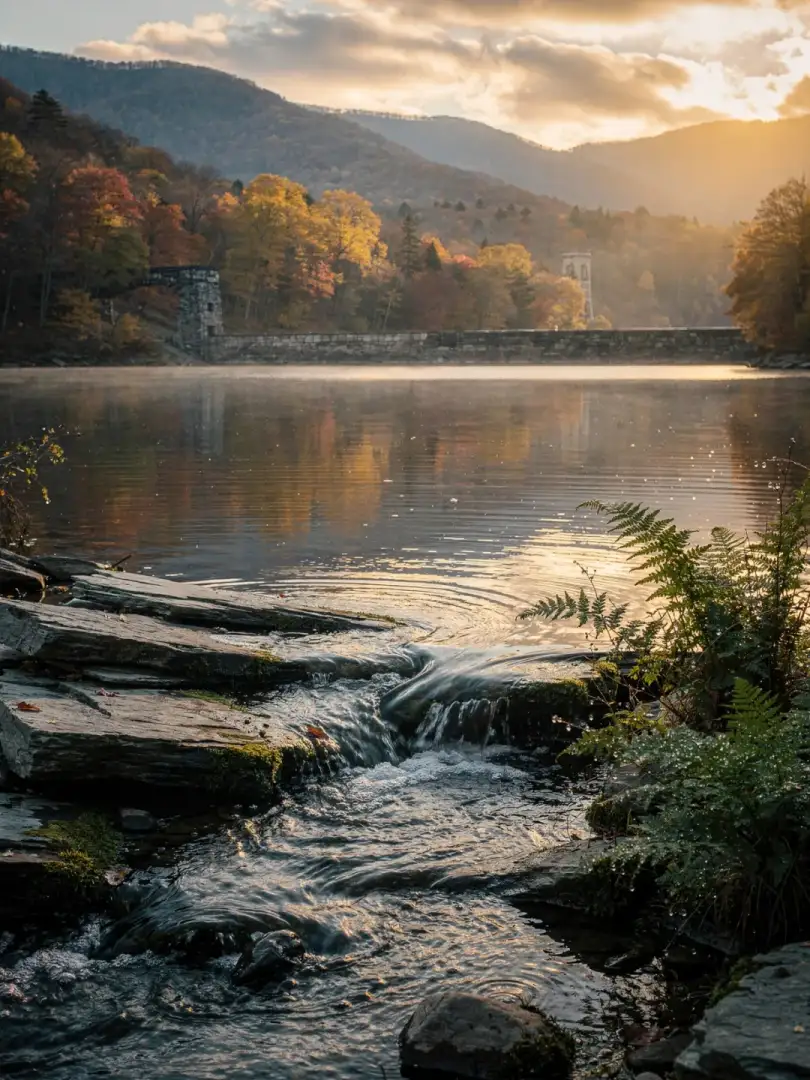
Where does New York City's brewing water come from? From the tap, and that tap draws mostly from the mountains. In 2021, the watershed west of the Hudson—Catskill and Delaware—supplied 88 percent of the city's drinking water; the rest came from the Croton system to the east. The water is considered soft, making it well suited to pale lagers.
Brewers of the founding era drank from different sources. The German lager brewers of eastern Brooklyn relied on the aquifer, an underground water reservoir beneath Brooklyn and Queens. It wasn't until Brooklyn's consolidation into the city in 1898 that the great mountain pipeline took center stage.
A brewery today adjusts its water as needed. For a Vienna lager, the brewer adds a bit of mineral salt; for a saison or a Belgian dubbel, they likewise tailor the hardness to suit the style. Soft starting water is easier to shape this way than water that's naturally very hard.
Climate makes lager brewing in New York a matter of cooling. Winters are cold, summers hot and humid. Before refrigeration, brewers cut ice from the Hudson River and stored it alongside barrels in cellars dug deep into the ground. Some of the old Brooklyn brewery buildings still stand today.
Cooperstown sits at the southern end of Otsego Lake amid gentle hill country. Ommegang's brewery occupies a former hop farm there, far removed from the big city.