Vienna Malt, Corn
Malt & Grain
A Vienna lager lives and dies by its malt. It's kilned at a higher temperature—dried in a hot air stream—giving the beer an amber color without adding bitterness. The style guideline spans 18 to 30 EBC, the brewer's color scale. The flavor evokes toast and bread crust.
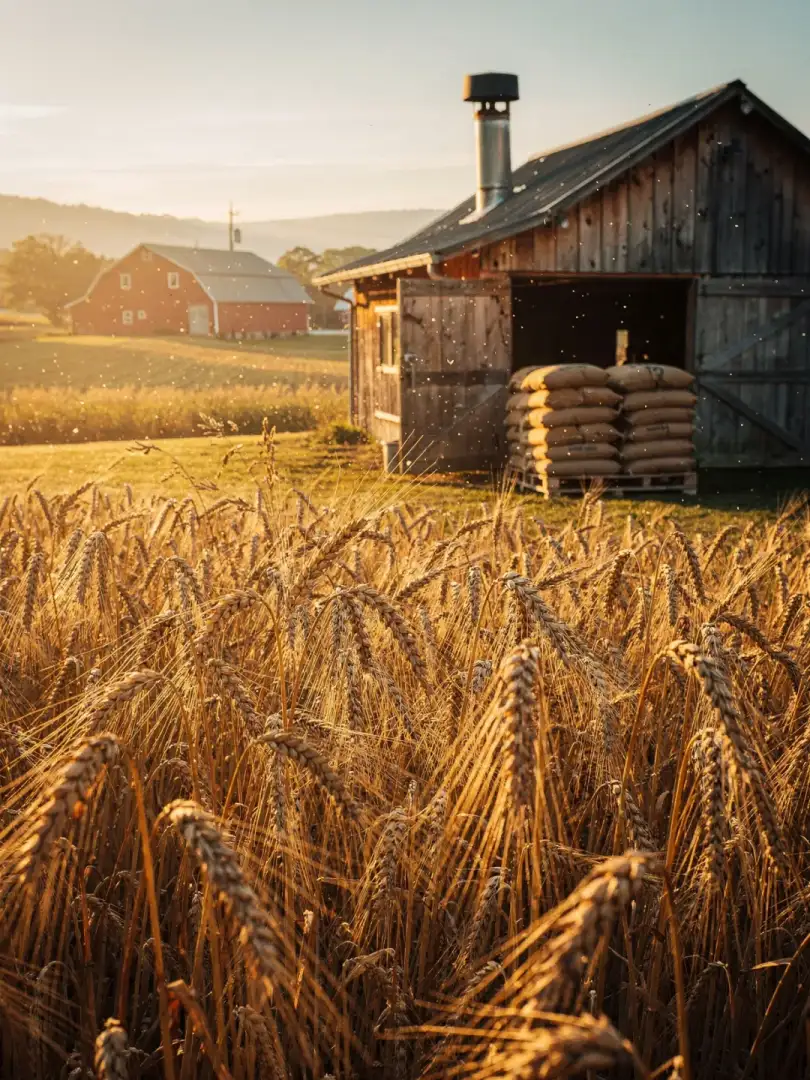
American brewers of the 19th century faced a problem. Local barley was higher in protein than its Bohemian or Bavarian counterparts. Many brewers compensated by adding corn, which lightens both the body and color of the beer. This gave rise to the American lager style that still underlies many of the country's beers today.
In recent years, a small scene of local maltsters has grown up in the Hudson Valley, processing barley and rye grown within the state. One example is Hudson Valley Malt in Germantown. For farm breweries looking to brew in New York, regional ingredients are part of the license requirements.
Belgian styles like the dubbel call for different malt. Pale Pilsner malt forms the base, joined by dark malt and often candi sugar. The sugar ferments out almost completely, leaving the beer dry despite its strength.
For a Brooklyn Lager, brewers follow the Vienna principle, reaching for Pilsner and Vienna malt, rounded out with a touch of caramel malt for color and sweetness. In Cooperstown, where Ommegang brews its Belgian beers, saison and dubbel call for pale Pilsner malt along with dark varieties in different proportions. Both are malted on the same principle: the barley germinates, gets kilned, then milled.