River, Lake, Cellar
Water & Soil
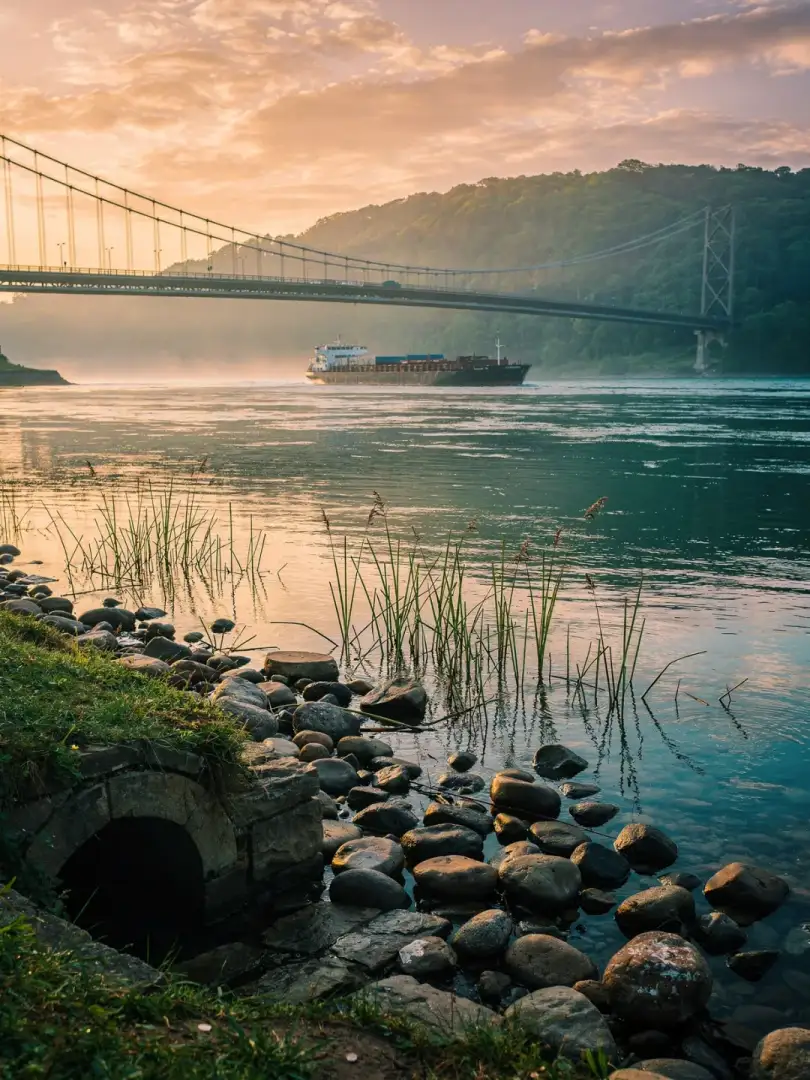
Cincinnati sits on the Ohio River, and the city draws much of its drinking water from it. The same was true for 19th-century brewers. River water changes composition with the seasons and water levels, so today breweries almost everywhere treat their water: softening, filtering, and adjusting with salts to suit the desired style.
For a long time, the ground mattered more than the water source. Over-the-Rhine sits at the foot of a hillside, and in the 19th century brewers dug cellars and tunnels into the earth, since lager beer needs to mature in cool conditions. In the hot, humid Ohio summers, there was hardly any other way to keep it cold. About a dozen of these tunnels have been uncovered so far, and more are still being discovered.
These passages were used to cool and store beer before refrigeration existed. Anyone walking through the neighborhood today is walking above spaces where barrels of lager once rested. Some of the old brewhouses and vaults stand empty or have been built over, but the tunnels themselves still lie beneath the streets.
More than 300 kilometers to the north, Cleveland sits on Lake Erie. There, the water comes from the lake, which supplies drinking water to 11 million people across the US and Canada. Cleveland Water alone serves 1.4 million of them.
The Cuyahoga River also flows into Cleveland. In 1969 pollution on this river actually caught fire, an event widely seen as a catalyst for the creation of the EPA and the Clean Water Act. Great Lakes later named its pale ale Burning River, after that very fire. Here, the water carries memory as well as flavor.