Barley & Corn
Malt & Grain
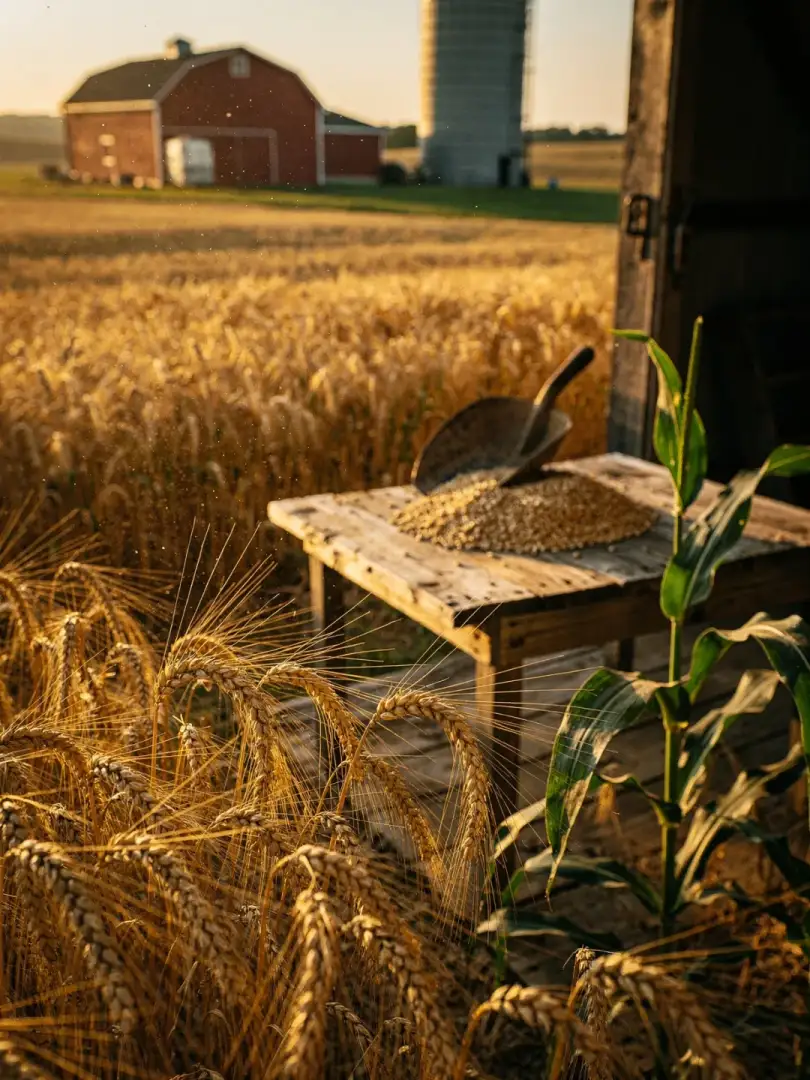
Barley is the heart of beer, even in Ohio. The grains are soaked until they germinate, then dried in a kiln, a heated drying chamber. The result is called malt. The hotter the kiln, the darker and bolder the flavor in the glass later on.
Many 19th-century American lager brewers worked with six-row barley. It grew well in the Midwest but contains more protein and husk than the two-row barley German brewers knew from back home. To keep the beer pale and light, many breweries blended corn into the malt.
This is legal because there is no Reinheitsgebot, or purity law, in the United States. Corn or rice aren't considered additives to be hidden, but ingredients like any other. This is one reason a German pilsner already differs from a classic American lager.
Today's craft brewers generally rely on pure barley malt. A Dortmunder Gold from Cleveland needs pale malt that yields a golden color of roughly 8 to 12 EBC. EBC is the European scale for beer color: the higher the number, the darker the beer.
A Burning River Pale Ale or a Truth IPA from Cincinnati is built on pale ale malt, often with a touch of caramel malt for sweetness and amber color. Malt serves as the counterbalance to hops. Without the sweetness of malt, hop bitterness would quickly taste harsh in the glass.