Lager, Porter, Blend
Yeast & Fermentation
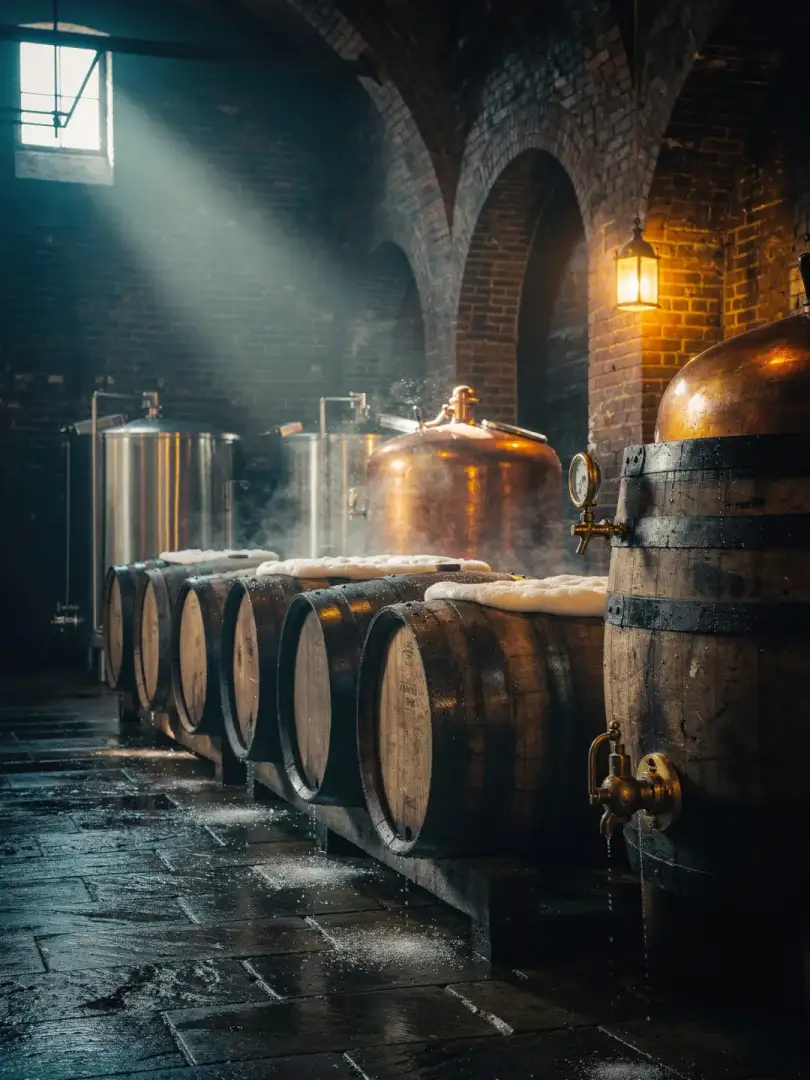
Top-fermented or bottom-fermented? In Pennsylvania, both ran side by side. Hare's porter was a top-fermented beer in the London tradition: the yeast collects on top of the fermenting wort and works at around 18 to 22 °C (64–72 °F). The result tastes fruitier and rounds out more quickly.
With the German immigrants of the 19th century, bottom-fermented lager became the mass-market drink. Here the yeast sinks to the bottom and ferments at just 8 to 12 °C (46–54 °F), after which the beer is cold-conditioned for weeks. "Lagern" literally means to store, and that's exactly what happens in the cellar: the beer clarifies and mellows.
Lager yeast is a hybrid of two species, Saccharomyces cerevisiae and Saccharomyces eubayanus. In 1883, Emil Christian Hansen succeeded in isolating a pure culture of bottom-fermenting yeast at the Carlsberg laboratory in Copenhagen. Since then, brewers no longer have to hope their yeast stays healthy—they can propagate it deliberately.
For a Pennsylvania lager, this means: cool fermentation, long aging, a clean beer without fruity side notes. A pilsner like Victory's follows the same principle, while an IPA ferments warmer, letting the yeast play alongside the hops.
A Pennsylvania specialty is blending: Yuengling's Original Black & Tan combines, according to the brewery, 40% pale lager with 60% porter. So it isn't mixed in the glass but blended before bottling. The concept exists in many countries; here it carries the brewery's name.