Coal, Limestone, Rivers
Water & Soil
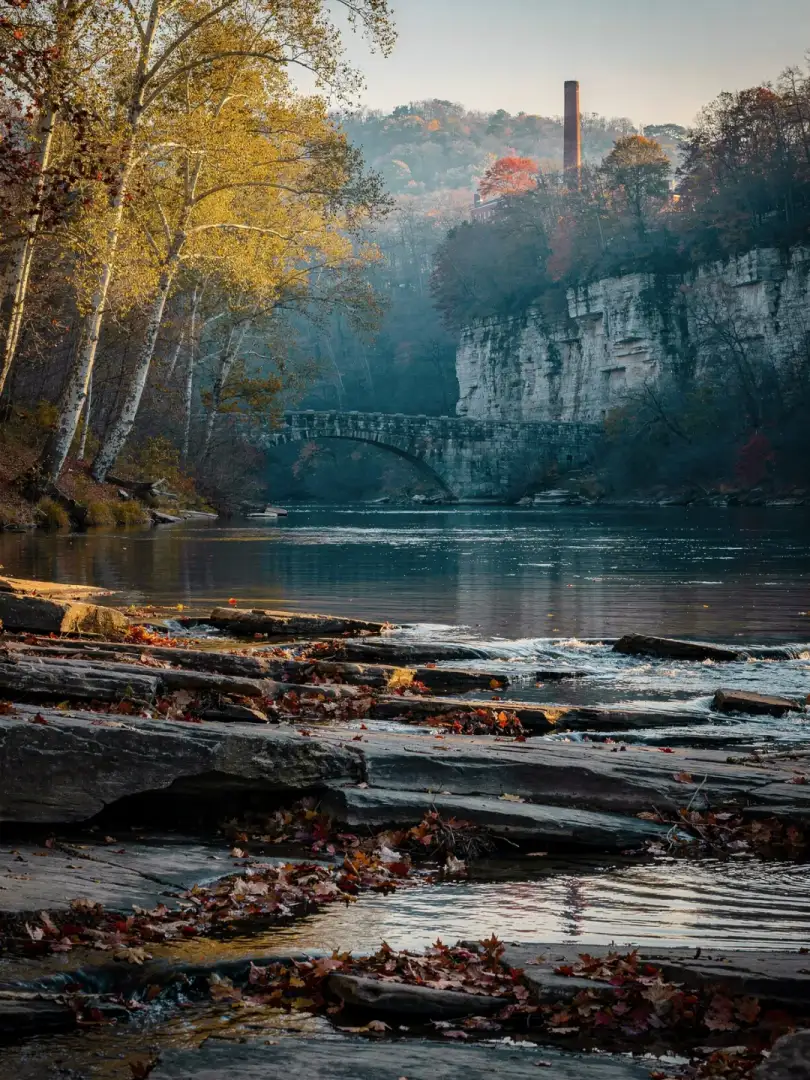
Between the coastal plain along the Delaware and the ranges of the Appalachians, Pennsylvania lies like a broad belt of hills, valleys, and rivers. Philadelphia sits where the Schuylkill and Delaware rivers meet, the Susquehanna flows through the east, and the coal region around Pottsville lies inland. It is precisely there, in Schuylkill County, that anthracite—a particularly hard, clean coal—has been mined since the early 19th century.
What does water do to beer? Hard, carbonate-rich water accentuates dark roasted malts and makes a beer rounder, while soft water lets hops and pale malts come through more clearly. London water was considered carbonate-rich and suited the porter Robert Hare brought with him. Specific ion values for Pennsylvania are not documented, so this remains a rule of thumb.
Today, spring water plays less of a role than it once did anyway. Nearly all breweries treat their water: they soften it, remove salts, or add minerals as needed. A brewer in Philadelphia can thus replicate almost any water profile without a single drop coming from Pilsen or Burton.
The land also shapes the beer landscape. In the southeast, around Downingtown and Lancaster, fertile limestone valleys with pastures and fields stretch out, while to the north and west the forested ridges of the Appalachians rise. This is where the streams that have long supplied towns and breweries with water originate.
Climate matters even more. Pennsylvania's summers are humid and hot, its winters cold. Before refrigeration technology, brewers stored their bottom-fermented beer in cellars, often dug into hillsides, and harvested natural ice from the rivers. This explains why the state's great brewhouses are almost always located on slopes and riverbanks.