Pale, Golden, Copper
Malt & Grain
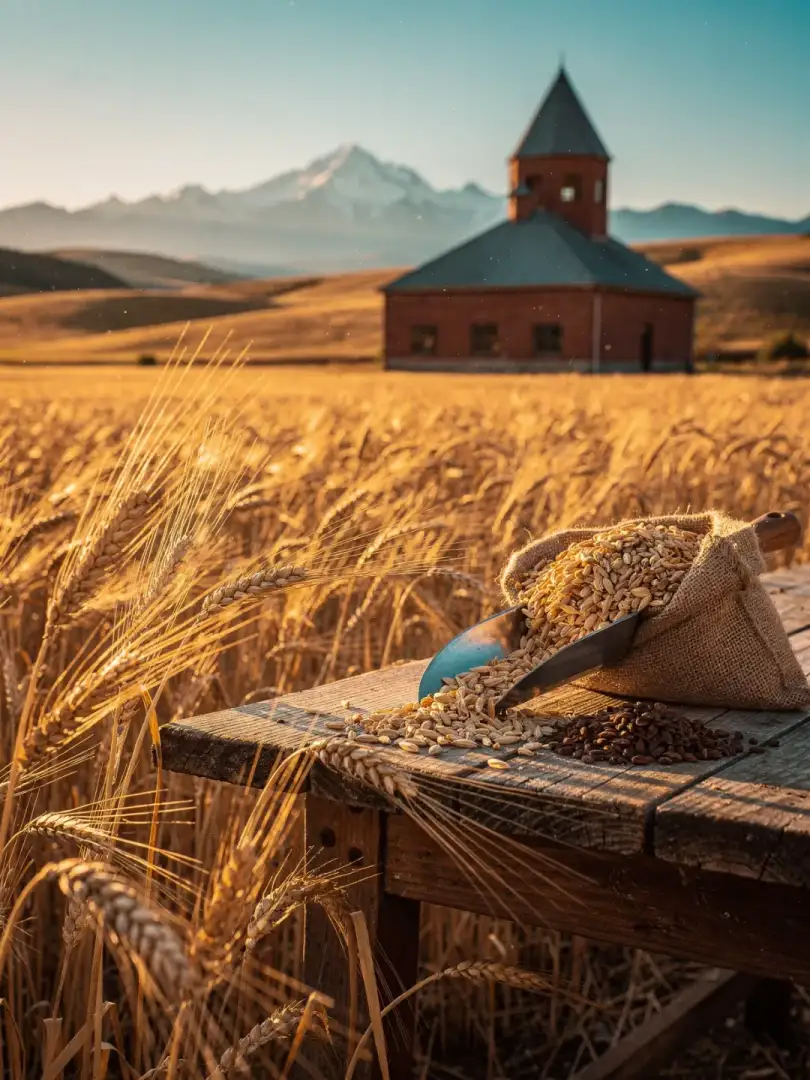
Almost every beer in Oregon starts with pale barley malt. Malt is barley that has been allowed to germinate in water and is then dried in a kiln, an oven that uses warm air. The hotter and longer it sits there, the darker and more roasted the malt becomes.
Pale Ale and IPA are built on this pale malt, with a small portion of caramel malt added for color and a touch of sweetness. According to the style guidelines of the BJCP, the competition organization, they fall between 10 and 28 EBC. EBC is the European color scale for beer; higher numbers mean darker beer.
Wheat enters the picture with Hefeweizen. In 1986, Widmer Brothers turned their own wheat beer into an unfiltered version and gave it the German name Hefeweizen. Wheat grows widely in the Pacific Northwest, mainly in large fields east of the Cascades.
Unlike in Germany, the US has no Reinheitsgebot, or purity law. Brewers are free to use ingredients like oats, rye, or fruit without their drink ceasing to be beer. Even so, malt remains the soul of beer, since it provides body, color, and a counterweight to hop bitterness. A Widmer Hefeweizen or a beer from the Willamette Valley is, first and foremost, a question of grain, and only after that a question of hops.
That's why a Pale Ale tastes like bread crust and light caramel, while a Porter such as Deschutes' Black Butte Porter tastes like coffee and dark chocolate. The dark roasted malts are kilned at high heat, turning the beer nearly black without necessarily making it sweet.