Clean Ale Yeast
Yeast & Fermentation
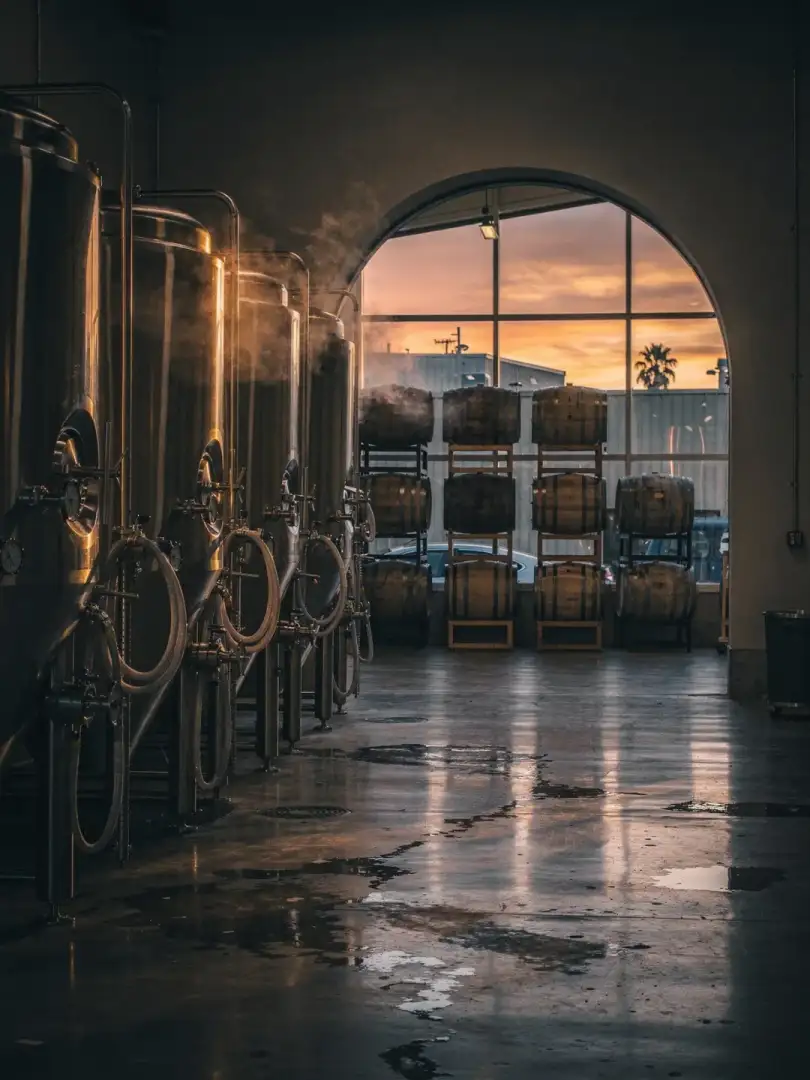
The fermentation tanks in a San Diego brewery are stainless steel, and inside them a clean, top-fermenting ale yeast almost always does the work. Top-fermenting means the yeast ferments at warmer temperatures and works near the top of the tank. It lets the hops take the lead, since it contributes very little fruity character of its own.
Fermentation for an IPA usually takes place just under 20°C (68°F) and lasts about one to two weeks. Dry hopping follows, with hops going into the tank for a few days. The beer is then chilled so the yeast settles out and the beer turns clear.
Clarity is a defining feature of the West Coast IPA style. It stands in contrast to the hazy New England IPA, which is deliberately left unfiltered, retains more yeast and protein in the glass, and tastes softer. A West Coast IPA, by comparison, is bright, golden to copper in color, and very dry.
Lost Abbey in San Marcos works quite differently. Its beers age in wooden barrels, where Brettanomyces and lactic acid bacteria can live alongside the brewer's yeast. These microorganisms make a beer dry, spicy, and sometimes sour. How long a beer stays in the barrel is a matter of taste for the brewer, often many months.
San Diego stands for hop bitterness, but also for its opposite: Belgian-inspired beers aged in barrels. Both paths share one trait: brewers work with great precision around temperature and time, because even small fluctuations change the aroma immediately.