Citrus and Resin
Hops
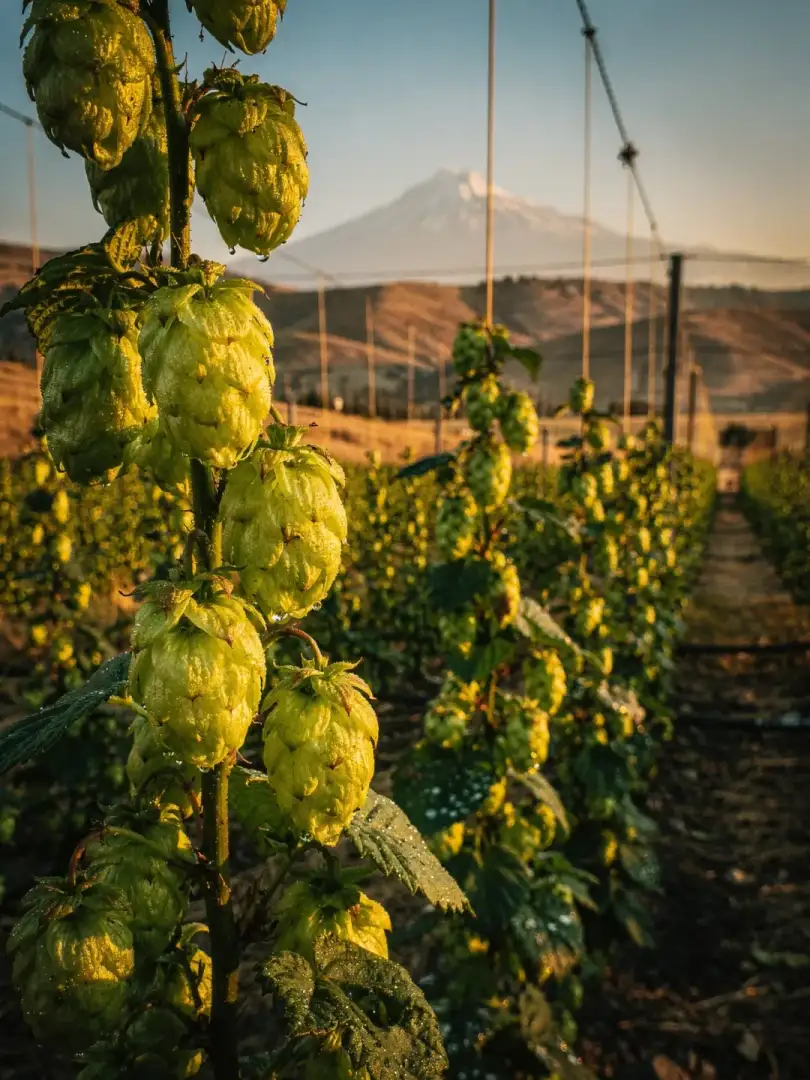
Cascade hops are considered the scent of the American craft movement, and the variety came onto the market in 1972. It's named after the Cascade Range, which rises east of Seattle. It smells of grapefruit and blossoms and defined the pale ale of the American West Coast.
The hops themselves don't grow by Puget Sound, but east of the Cascades in the dry hinterland. In 2025, the US harvested around 37,500 tons across 17,057 hectares, according to the BarthHaas report — that's about 40 percent of the world's alpha acid output. Alpha acid is the compound that gives beer its bitterness.
Alongside Cascade stand Centennial with its citrus and floral notes, Simcoe with pine resin, Citra with mango and lime, Mosaic with berries and tropical fruit, and Amarillo with orange. Brewers from Elysian to Redhook blend them batch by batch like spices, with Cascade hops remaining the classic. Rarely does just one variety go into the kettle, since it's the blend that gives a beer its own signature.
Bitterness and aroma come from different points in the process. Hops boiled for a long time release mainly bitterness, since the heat dissolves the alpha acids. Hops added shortly before the end of the boil, in the whirlpool, or directly into the fermenter deliver aroma, because the volatile oils don't evaporate. This last method is called dry hopping.
An American pale ale sits at 30 to 50 IBU per style guidelines, an American IPA at 40 to 70. IBU is the unit of measurement for bitterness. What matters most, though, is how much hops were added late, since that determines whether a beer leans resinous-bitter or fruity-aromatic. Anyone drinking a Redhook or an Elysian tastes that brewer's decision in the first sip: in some beers, bitterness leads; in others, aroma does.