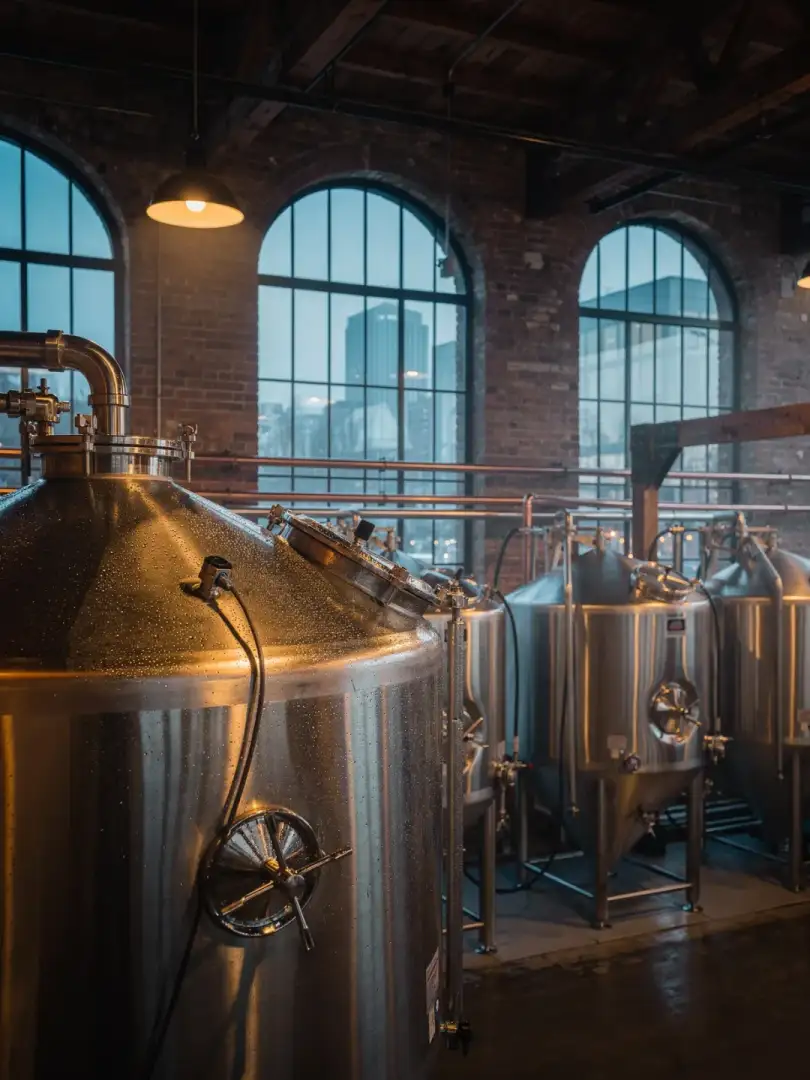
Tanks in Workshops
Yeast & Fermentation
Pale ale and IPA are top-fermented, meaning the yeast works at room temperature and gathers at the top of the fermentation vessel at the end. Typical temperatures run about 18 to 20°C. In the process, the yeast produces fruity esters that pair well with hop aroma, which is why these beers don't need long aging.
In Seattle, most fermentation happens in cylindroconical stainless steel tanks. Their bottoms taper to a point, so yeast and trub settle below and can be drained off. Fermentation takes one to two weeks, followed by conditioning at cooler temperatures so the beer turns clear and rounded.
Rainier, by contrast, is an American lager and therefore bottom-fermented, meaning it ferments cool at around 10°C and conditions for longer. This technique requires more space and time, which the small Seattle startups simply didn't have. They bet on ales instead.
One distinctive feature is location. Seattle's breweries occupy buildings with other histories. Redhook moved into a transmission shop and later a streetcar barn, while Elysian in Capitol Hill is housed in a 1919 Packard automobile warehouse. The brewhouse is woven into the fabric of the city.
Freshness matters enormously for flavor too. An IPA loses its aroma within weeks of bottling. That's why Seattleites like to drink it right where it's brewed, straight from the tap in the taproom, filling growlers or crowlers — large bottles and cans for takeaway — only shortly before drinking.