Pint and Taproom
Tasting
What does a pale ale or IPA from Seattle taste like? First comes the aroma: grapefruit, orange peel, pine needles, and sometimes mango. Then comes the sip, which flows softly into the glass since the water has almost no hardness, and at the end a bitterness lingers that fades gently without any harsh edge.
Local examples are easy to find. Georgetown Brewing's Manny's Pale Ale represents the classic style from the city's south side. Fremont Brewing operates in the neighborhood of the same name and runs a beer garden there. Elysian from Capitol Hill, owned by Anheuser-Busch since 2015, brews one of its best-known hop-forward beers, Space Dust IPA.
It's typically served in a pint glass, the tall glass that widens toward the top. A US pint holds 16 fluid ounces, about 473 milliliters. Anyone wanting to really explore the aromas should use a tulip glass or a stemmed glass, since that's where the aroma collects.
Temperature is a balancing act. Too cold, and the hops lose their scent entirely. Too warm, and the bitterness turns flabby. For pale ale and IPA, around 7 to 10°C works well.
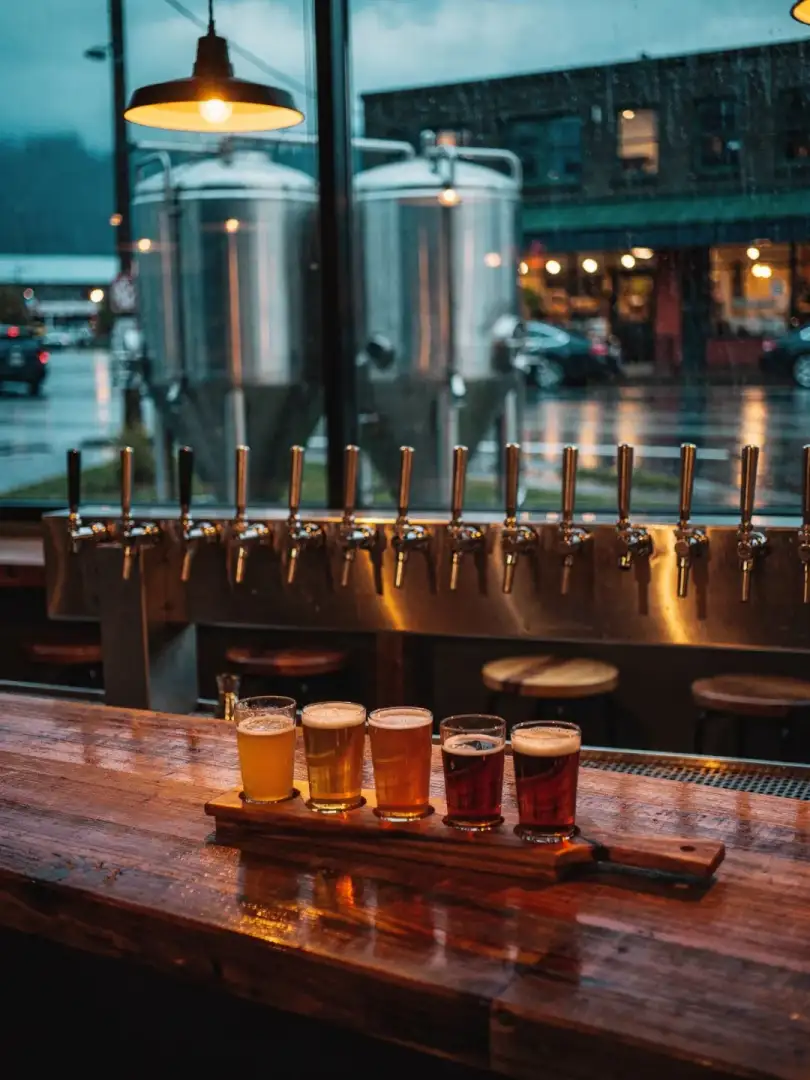
In the taproom, beer is often poured straight from the tank or cask. For those who want to sample a little of everything, a flight of four or five small glasses is the way to go. This is how you learn to tell a pale ale from an IPA. Hop-forward beer often tastes fresher straight from the tap than from the bottle, since less air and light reach the aroma.