Yakima, Cascade, IBU
Hops
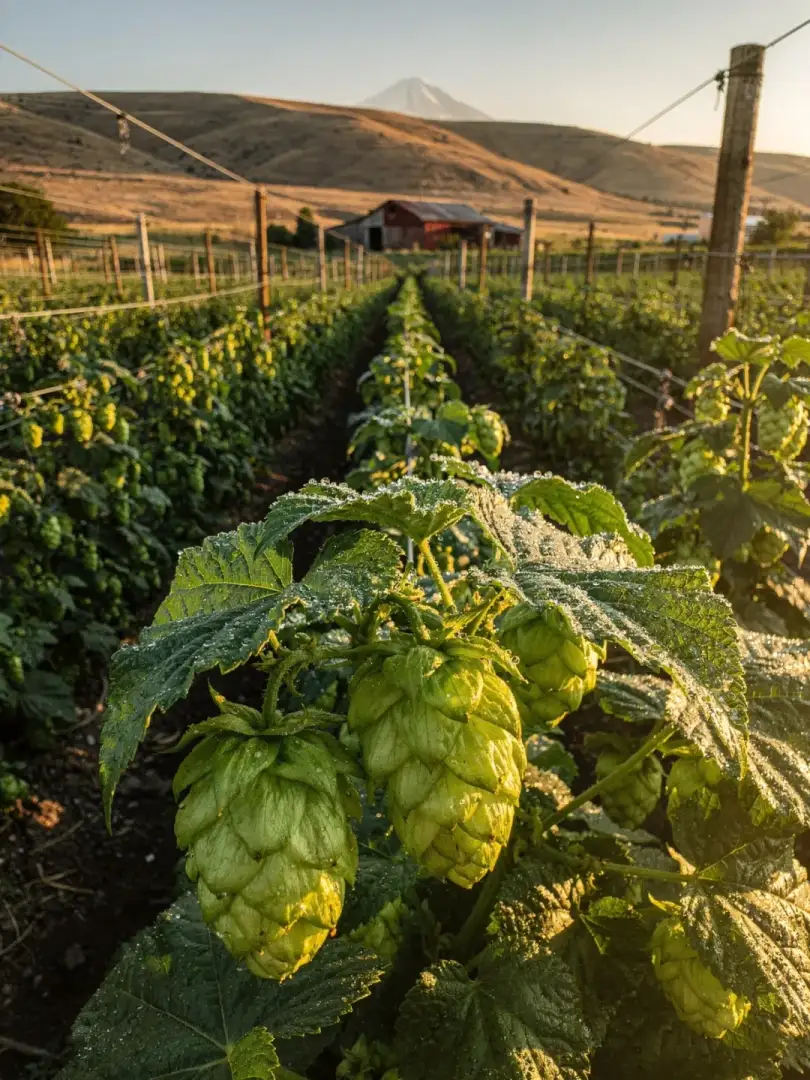
Where does the hops for a St. Louis beer come from? It doesn't grow right outside the door—most of it comes from the Pacific Northwest, from Yakima in Washington, as well as Idaho and Oregon. The crop travels clear across the continent before it ever reaches the brew kettle on the Mississippi.
In 2025 the US grew hops on 17,057 hectares. According to the BarthHaas report, this supplies around 40 percent of the world's alpha acid. Alpha acid is the compound in the hop cones that gives beer its bitterness—the more of it, the more assertive the brew tastes.
According to its own statements, Anheuser-Busch uses a blend of American and imported aroma hops for Budweiser. Aroma hops are boiled only briefly or added late in the process so their fragrance stays in the beer. Hops added early to the kettle, by contrast, contribute the bitterness.
Bitterness is measured in IBU, International Bitterness Units. An American lager, per BJCP, falls between 8 and 18 IBU, while an American Pale Ale ranges from 30 to 50. You taste the difference immediately: the lager is mild with almost no hop bite, while the Pale Ale has a noticeable bitter edge on the palate.
The Pale Ale draws its character from varieties like Cascade, released in the US in 1972 and known for its citrus and grapefruit aromas. Hops like these gave the American craft movement its signature flavor. In St. Louis the contrast is especially vivid, since the city has both side by side: corporate lager and Pale Ale from hop farmers out West.