Briefly Aged
Yeast & Fermentation
Yeast feeds on the sugar in the wort and turns it into alcohol and carbon dioxide. Bia hơi is considered a light lager, meaning it's bottom-fermented with yeast of the type Saccharomyces pastorianus, which works at cool temperatures. This yeast is a hybrid of two species and is standard worldwide for pale lagers.
What sets Bia hơi apart from a European lager is time. A German Helles typically ages for weeks in the lagering tank, allowing the flavor to round out and the yeast to settle. Bia hơi, by contrast, gets only a short fermentation and a brief conditioning period before going into the keg and heading out to the bars.
It isn't pasteurized. Pasteurization involves briefly heating the finished beer to kill off microbes, extending shelf life by months. Bia hơi skips this step and contains no preservatives and no added carbonation. The carbonation in the glass comes solely from fermentation, which is why the foam is delicate and short-lived.
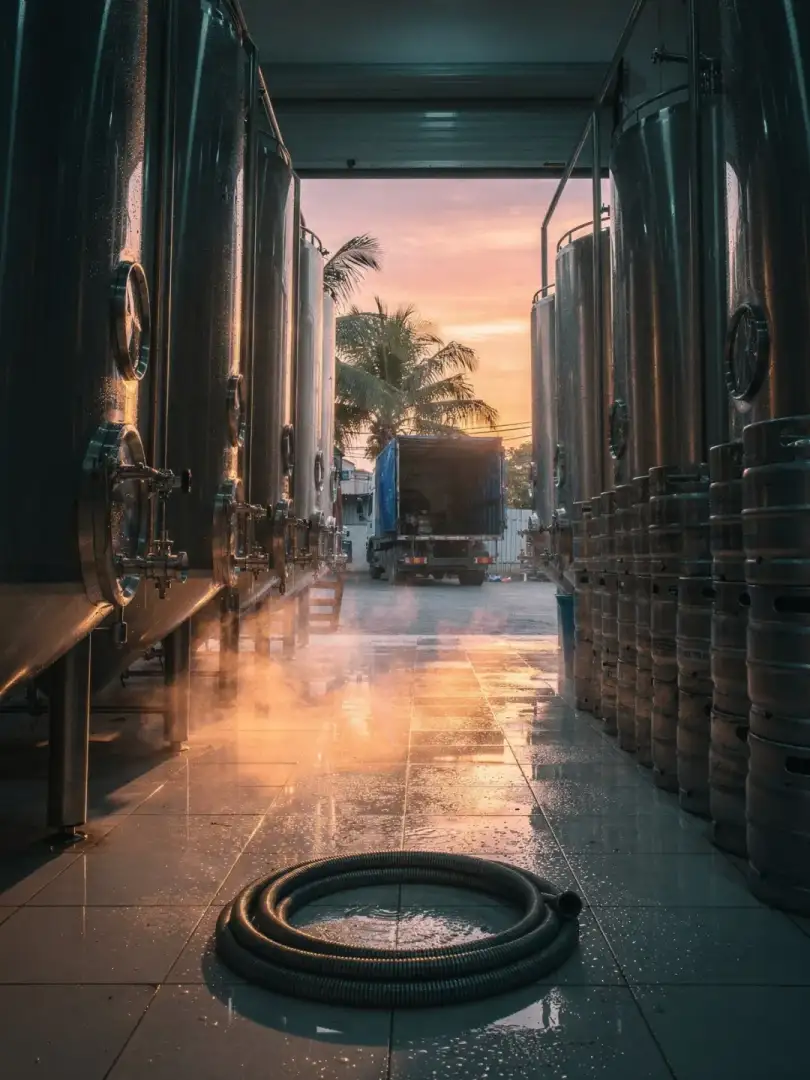
The keg is at the heart of the matter. It's made of metal, returned once empty, and refilled. Every bar gets its delivery fresh each day. Where another beer might sit for a long time, Bia hơi is done at the latest after a day.
Habeco also brews bottled beer, and there the opposite applies. These beers are pasteurized and can sit on the shelf for weeks. Anyone who tries both notices the difference in freshness: the draft beer is lighter and a bit livelier, the bottled beer rounder and more consistent.