Pitting and Fermenting
Mash & Fermentation
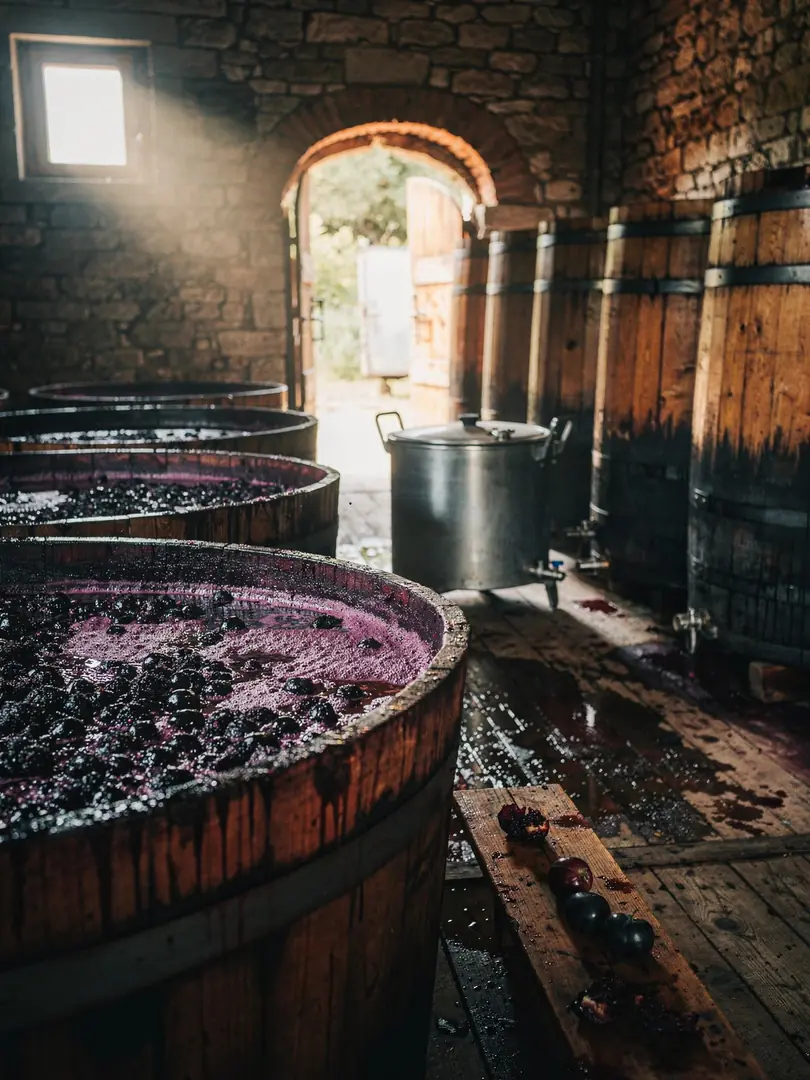
Before plums become a brandy, their sugar must turn into alcohol. According to the specification for Hrvatska stara šljivovica, healthy, ripe fruit is pitted, crushed and strained. This speeds up fermentation, yields more alcohol and produces fewer volatile acids that would otherwise harm the fermentation.
The mash then goes into fermentation vessels. Fermentation begins either through microbes already present on the fruit or through selected yeasts. It takes place without oxygen, at no more than 28 degrees Celsius, and typically lasts up to ten days, until sugar content drops below 0.3 percent. Cooler fermentation runs slower, but it makes the mash more aromatic.
Every fruit brandy contains methanol, because it forms from the pectin in the fruit skins already during mashing, not only during distillation. This is why the law sets maximum limits: for plum, it's 1,200 grams per hectolitre of pure alcohol, and for stone fruit there's an additional limit on hydrocyanic acid of 7 grams. That's why the stones are not crushed.
For Brinjevec, the crushed juniper berries themselves are fermented. Unlike gin, where juniper flavors a neutral spirit, here the alcohol itself comes from the berries. For Dolenjski sadjevec, mixed fruit, mainly apples and pears, ferments together in a single mash. Hrvatska loza, by contrast, comes from grape pomace, the skins and seeds left over after pressing, which still need to ferment on their own.
The worry that fruit brandy causes blindness doesn't apply to legally produced spirits, since they stay below the EU's maximum limits. The real danger lies in adulterated alcohol containing industrial methanol, which these limits are specifically designed to rule out. Most of the later aroma is already present in the mash, even though its alcohol content is far below that of the finished brandy.