Bistrica, Apple, Juniper
Fruit & Raw Material
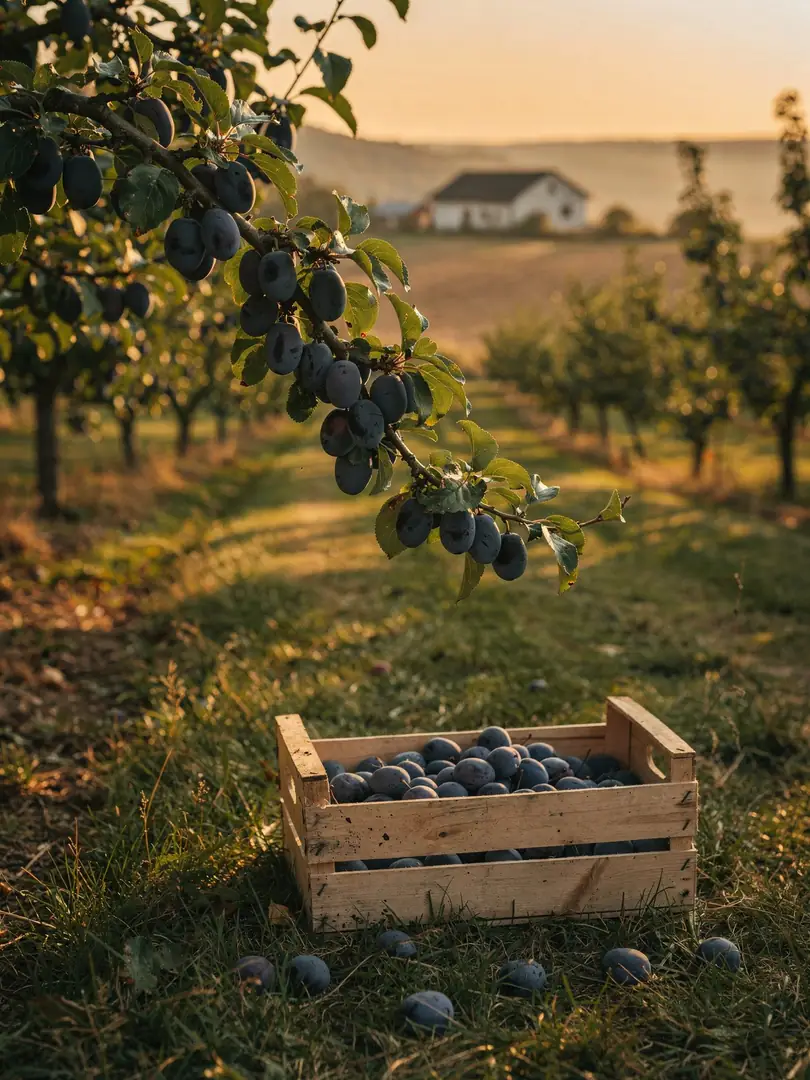
In early September, the Bistrica ripens in Croatia, a small, oval plum with dark blue skin, a grey bloom and yellow flesh. In the specification for Hrvatska stara šljivovica, it's recognized as the best-known naturalized variety for plum brandy, though varieties closest to it in aroma are also permitted. Sugar content averages 10 to 14 percent and can rise as high as 20 percent.
The flesh separates easily from the stone, which makes later processing easier. For the brandy, plums are harvested at full ripeness, when they're soft and carry the most sugar. According to the specification, they're gathered mechanically by shaking the whole tree or individual branches.
Slavonska šljivovica doesn't require a single variety, but instead uses both native and introduced plums. A Croatian research paper describes how the distilling tradition in Slavonia helps keep old plum varieties alive. After all, anyone with fruit trees in the yard tends to keep the ones that yield something good.
For Dolenjski sadjevec, the blend determines the character. It's made from fruit grown and processed in Dolenjska, predominantly apples, usually around three-quarters of the mix, along with pears and occasionally plums. Brinjevec, meanwhile, starts with common juniper, Juniperus communis. EU law classifies it among fruit spirits, with a higher methanol limit of 1,350 grams per hectolitre of pure alcohol, the same as for quince or Williams pear.
Then there are two raw materials that don't grow in the orchard: grape pomace for Hrvatska loza, and the marasca cherry, Prunus cerasus var. marasca, for Zadarski maraschino. As a sour cherry, the marasca is less suited to eating fresh than to distilling, and it's from this distillate that the liqueur draws most of its aroma.