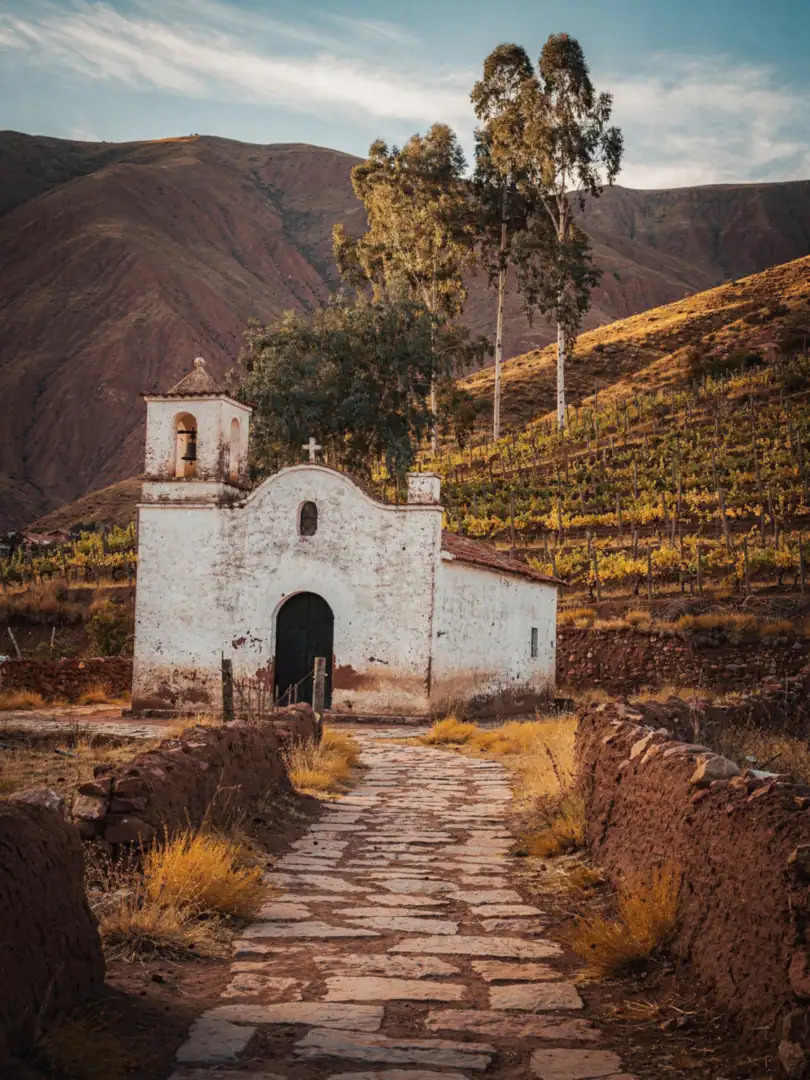
High Valleys in the South
Region & History
What is Singani, and where does it come from? The answer lies in southern Bolivia, in the high valleys around Tarija near the Argentine border. The first vines arrived in the 16th century with Spanish missionaries, who needed wine for Mass. Wherever wine grows, distilling eventually follows, and monastic orders, including the Augustinians, are considered the first distillers of Singani.
In the 17th century, the Cinti Valley grew into an important wine supplier for the silver city of Potosí. The valley now belongs to the Department of Chuquisaca, around the town of Camargo. Later, Tarija took the lead: in the 20th century, the area became the most important grape supplier for Singani, and the bulk of Bolivia's viticulture and distilling now sits there.
The name is traced to the Aymara word siwingani, meaning the place where sedge grasses grow. Since a 1992 law, Singani has held Denominación de Origen status, a protected designation of origin. It stipulates that the brandy must be made from Muscat of Alexandria, with vines grown at a minimum altitude of 1,600 meters. The growing region spans four departments: La Paz, Chuquisaca, Tarija, and Potosí.
Among the well-known houses are Casa Real, Los Parrales, Rujero, and Kuhlmann. Alongside them, smaller, craft-oriented distilleries operate in Tarija and the Cinti Valley. Casa Real, a family business in Tarija, also bottles Singani 63, which director Steven Soderbergh has been bringing to the world since 2014.
Anyone who equates Singani with Pisco is mistaken. Pisco belongs to Peru and Chile, both of which hold their own designation of origin and dispute the name. Singani is a different brandy altogether, with a different name, a different region, and a single grape variety. Within the EU, the name Singani does not appear in the register of protected designations of origin.