High-Altitude Muscat
Fruit & Raw Material
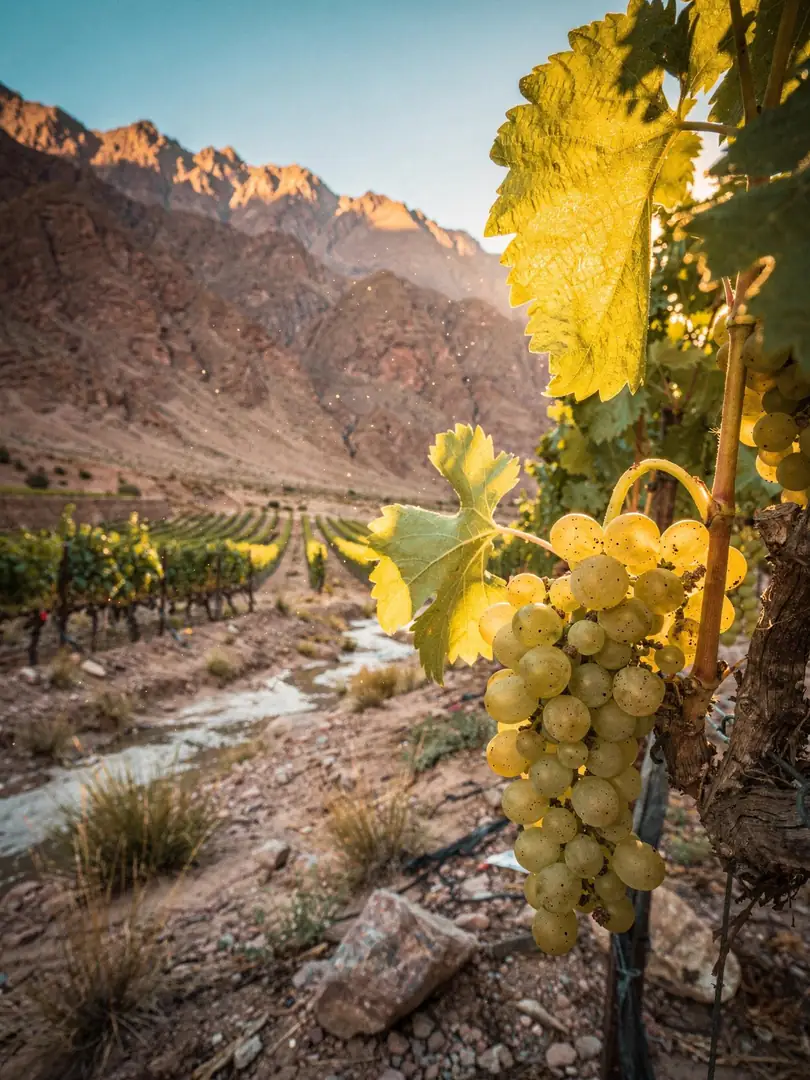
A single grape variety carries Singani: Muscat of Alexandria, known in German as Muskat von Alexandria. This white, large-berried grape has a fragrance of blossoms and muscat and is harvested for both wine and brandy alike. This sets Singani apart from Pisco, which permits several varieties, and from Cognac, which relies chiefly on Ugni Blanc.
Altitude is decisive. The designation of origin requires vines grown at a minimum of 1,600 meters, and in southern Bolivia many vineyards sit between 1,700 and 2,100 meters. There, the sun is strong, the nights are cool, and the grapes ripen slowly. It's precisely this slow ripening that benefits the muscat aroma.
The most important growing areas lie around Tarija, including the Valle de la Concepción and near Uriondo, along with the Cinti Valley further north. The vines grow in narrow valleys between dry hillsides. Small operations and larger houses share these slopes.
Harvest takes place in the Southern Hemisphere's late summer, roughly between February and April. Those picking for brandy need grapes with enough sugar for alcohol, but also a fresh fragrance, so the finished Singani tastes of muscat rather than raisins.
Unlike Grappa, which is made from pressed grape residue, Singani is distilled from wine. The grapes are first pressed and the juice fermented. The next stop will reveal exactly how this unfolds. One thing to understand: the name Singani belongs only to the brandy made from this grape and from these high altitudes. A muscat grape grown in the lowlands wouldn't be allowed to carry it—so the designation of origin demands. It's precisely the altitude that creates the distinction Bolivians associate with the name.