A Brandy All Its Own
Brandy Style
Singani is a clear, aromatic grape brandy made from wine of the Muscat of Alexandria variety, grown in Bolivia's high altitudes. It is neither a Pisco nor a Cognac, though it shares something with both: from Cognac, double distillation in copper; from Pisco, a clear, wood-free presentation.
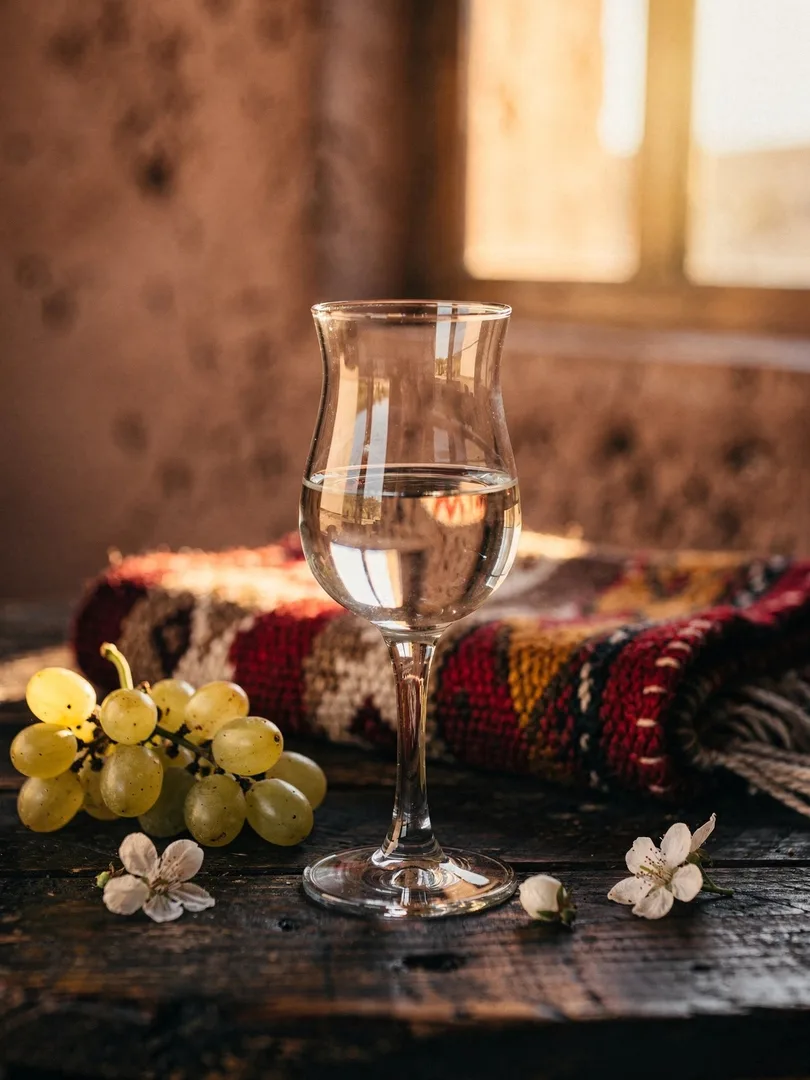
In the glass, it's the fragrance above all that surprises. Where Grappa smells of pomace and Cognac of wood and dried fruit, Singani puts the muscat grape front and center, with blossoms and fresh grapes. This makes it softer and more floral than many other clear spirits.
The difference from its neighbor: Peruvian Pisco, which holds its own designation of origin, may be made from several grape varieties and is distilled only once. Singani sticks to a single variety. Chilean Pisco, by contrast, allows wood aging and the addition of water, neither of which belongs to Bolivian tradition.
The best-known name outside Bolivia is Singani 63. Director Steven Soderbergh discovered the brandy while filming Che in Bolivia. He partnered with Casa Real in Tarija and has, since 2014, exported the house's black-label line. The brandy owes its name to its birth year, 1963.
In the country itself, Singani is most often drunk as a Chuflay, mixed with ginger ale. More on that in the final stop. For a useful way to place it all: Cognac lives for its wood, Grappa for its pomace, Pisco for its simple, direct distillation, and Singani for the muscat grape grown at great altitude. Line up all four, and you'll see each offers its own answer to what a grape brandy ought to be.
SinganiWine and grape brandy · Muscat of Alexandria
- Alcohol
- 40 % vol
- Maturity
- 0–1 Years
Crystal clear, muscat blossom and fresh grape, soft and wood-free on the finish.