Rest Without Wood
Aging & Storage
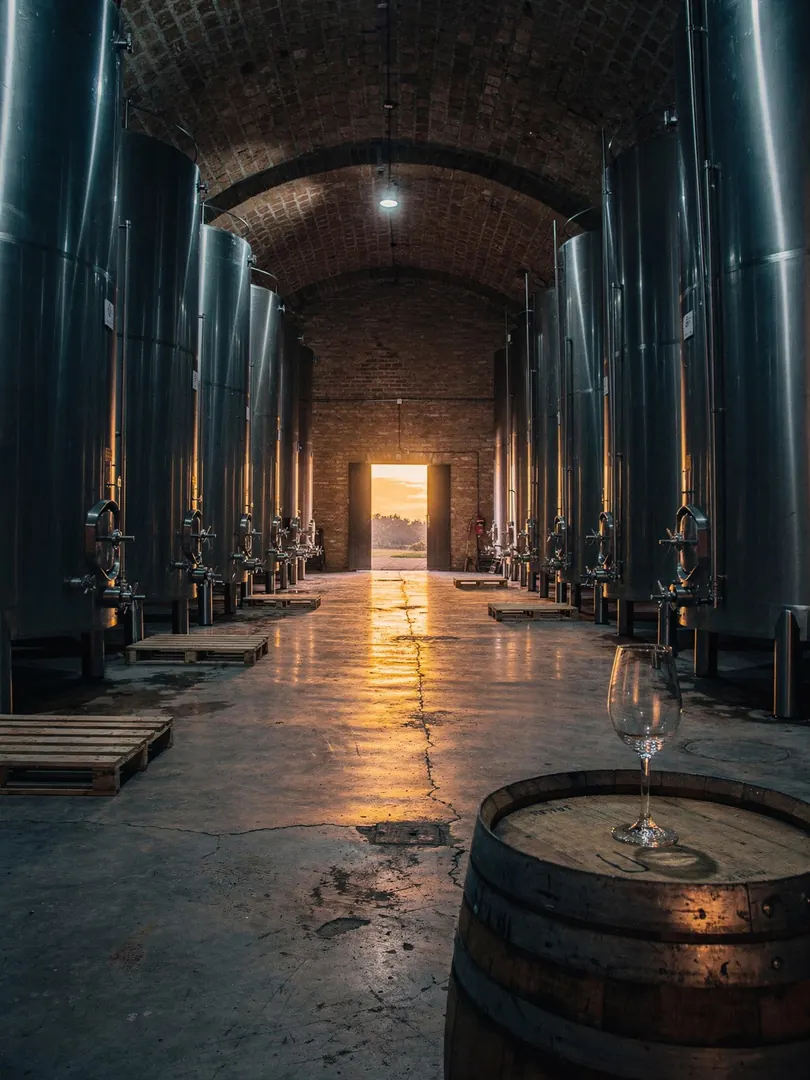
After distillation, Singani is allowed to rest before bottling. It does so not in oak barrels, but in neutral vessels, usually stainless steel tanks. There, sharp edges soften, aromas knit together, and the brandy grows rounder. It takes on no color in the process: Singani remains crystal clear.
How long it rests varies by producer. Typically, several months are mentioned, often between six and nine. For Singani 63, reports cite a resting period of nine months in tanks.
This marks a clear contrast with Cognac, which must spend at least two years in oak barrels before it can bear the name. Singani sits closer to Pisco, which in Peru rests for at least three months in neutral vessels and likewise never touches wood. Anyone expecting a barrel in the cellar will search in vain with Singani.
Because no wood enters the picture, the muscat grape's fragrance stays front and center. Aging over years isn't the goal; the brandy is meant to stay fresh. Age classifications like VS, VSOP, or XO, familiar from Cognac, aren't customary for Singani.
Singani is usually bottled at 40 percent alcohol by volume, or 40% ABV. From there, it holds steady in the bottle without further aging. Once opened, it's stored like any clear spirit, in a dark place at room temperature. This suits the brandy's whole idea: it should taste of the grape, not of the vessel. Anyone tasting it for the first time quickly notices that the fruit takes center stage here, not the cooper's craft.