Column and Cuts
Distillation
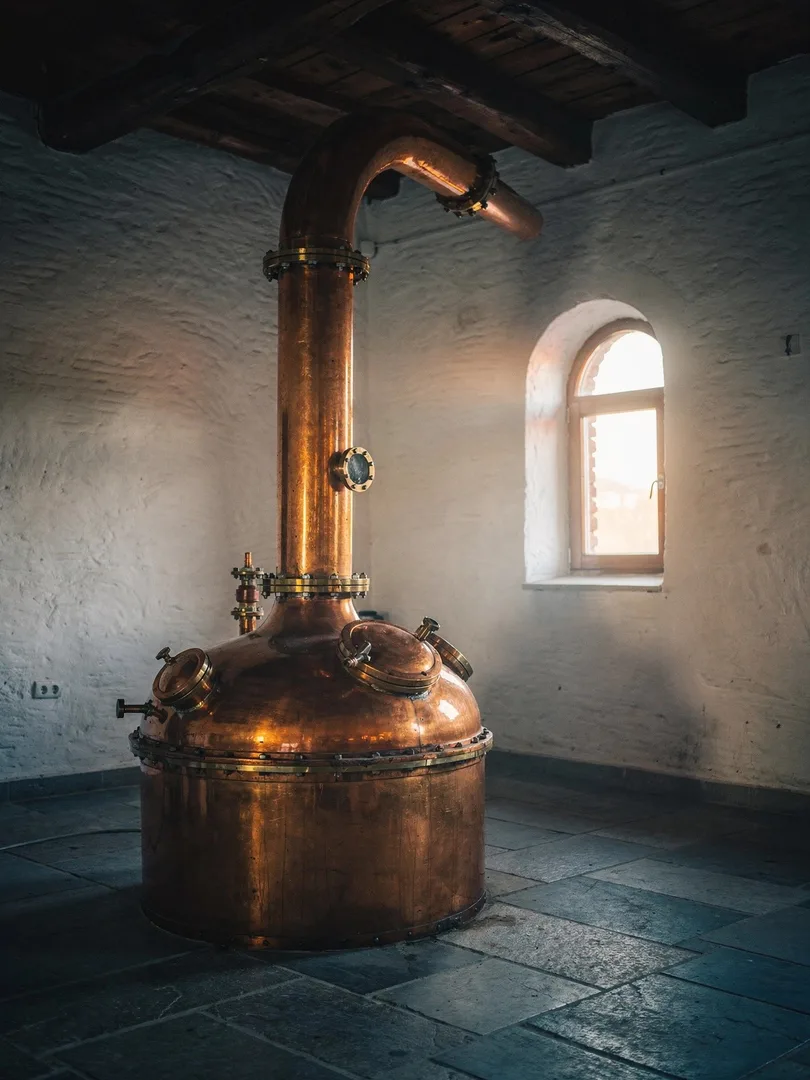
How is rakia distilled? That depends on the name, since each designation of origin has its own technical file. Bourgaska Muscatova rakya is distilled according to a traditional Bulgarian method in a specially built column, a tall apparatus in which vapor rises through several plates and condenses again. In this way, the alcohol is enriched step by step.
For Slivenska perla, the file sets a limit: the wine may be distilled to no more than 65% ABV. This keeps the distillate aromatic, and it's only later brought up to the strength at which the rakia is sold, at least 40% ABV.
Whether column or pot still, the distiller cuts the distillate into three parts. The heads come first and smell sharply of solvent. The hearts, the heart of the run, carry fruit and aroma. The tails at the end taste of wet cardboard and fusel oils and are separated out.
Cutting the heads only partially lowers the methanol, because most of it has already formed in the mash. That's why a limit of 200 grams per hectoliter of pure alcohol applies to wine spirits. Anyone who hears of adulterated alcohol is talking about industrial methanol, not legally produced spirits.
Troyan's plum rakia is made using a traditional technique, which its technical file cites as one of the reasons for its distinctive flavor. Plums bring pits along, and when distilling stone fruit, distillers watch for hydrocyanic acid, which must not exceed the EU limit of 7 grams per hectoliter of pure alcohol.
Distilling takes place under license and supervision. In Germany, private distilling without a permit is prohibited, so a distillery can only be experienced on a guided tour.