Barrel and Time
Aging & Storage
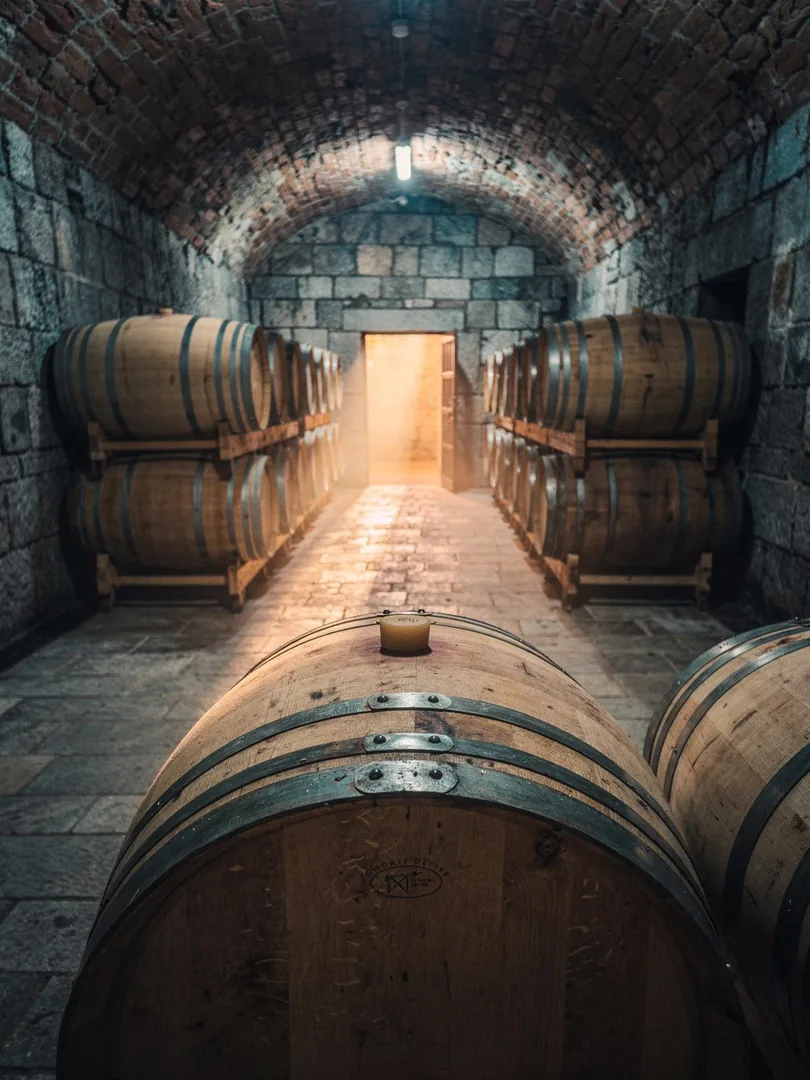
The color of rakia reveals whether it's been aged in wood. Freshly distilled, it's clear; with time in the oak barrel it turns pale yellow, later amber. The barrel also adds vanilla and spice to the spirit.
For Slivenska perla, the requirements are as follows: the special and limited series age for at least six to twelve months in oak barrels, the finest batches for three years or longer. The result ranges from pale yellow to amber.
Straldjanska Muscatova rakya follows the same pattern. It rests for at least six months to a year in oak barrels, with the finest batches aging at least three years. The file describes the color as pale yellow to light amber.
With Bourgaska Muscatova rakya and Karnobatska grozdova rakya, wood isn't the only factor at play. Their light golden color, according to the files, comes either from oak aging or from the addition of caramel. Caramel coloring to adjust appearance is permitted for wine spirits, so color alone only tells you so much about age.
The longest aging belongs to Troyan's plum rakia. The file sets a minimum of three years in small oak barrels, with the finest batches aging up to 25 years.
How much an age statement on the label actually tells you is set by EU law: an age statement may only refer to the youngest component in the blend. By comparison, Cognac requires at least two years in oak, and brandy under EU regulation requires one year in a large barrel or six months in a small one. For wine spirits, the regulation itself prescribes no minimum aging.