Muscat, Fig, Plum
Style
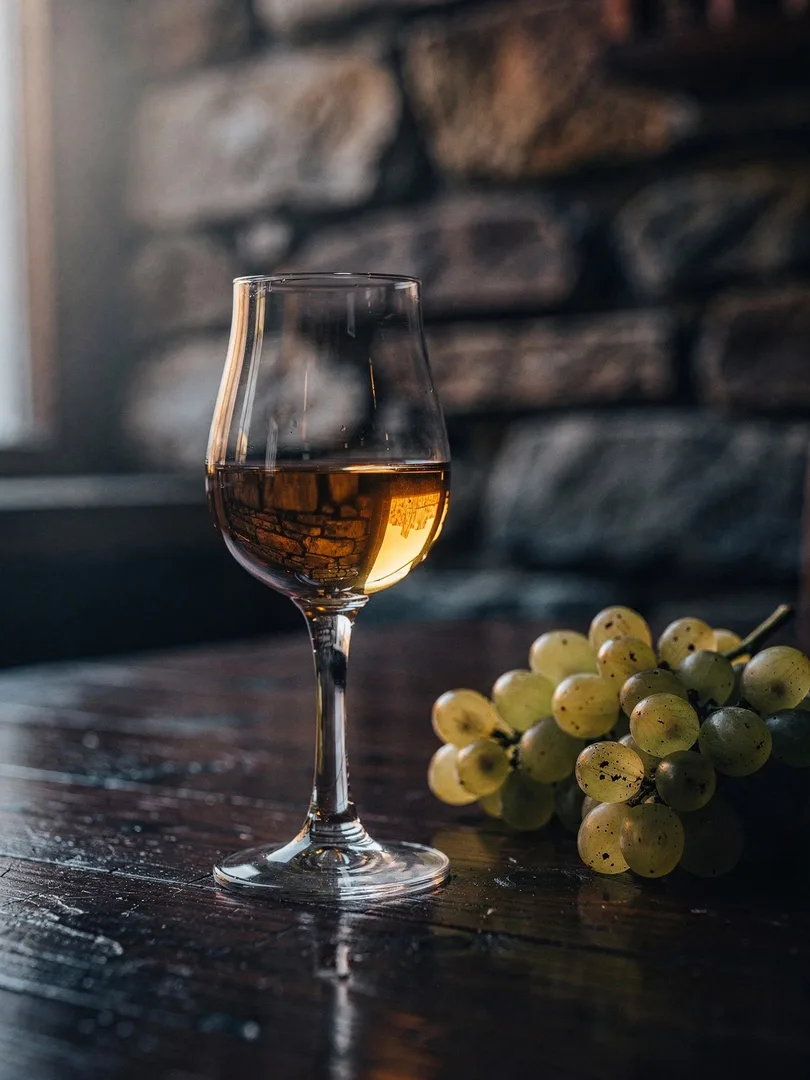
Muscat defines the style of Bulgarian grape rakia. Slivenska perla smells of rose and rose geranium, with buttery notes that the file describes as characteristic. It's at least 40% ABV and ranges from pale yellow to amber.
Straldzha's rakia presents similarly, with rose, geranium and Muscat. Burgas's rakia, by contrast, shows more dried fruit and a hint of vanilla. Anyone wanting to tell the two Muscat rakias apart should watch for blossom versus dried fruit.
Karnobatska grozdova rakya takes a different path: ripe grapes with hints of apple and fig, pale yellow from oak aging and caramel, at least 40% ABV.
Labels often carry two scripts side by side, Cyrillic and a Latin transliteration such as Slivenska grozdova rakya or Grozdova rakya from Sliven. Both mean the same product. The designation of origin for Sliven even carries two names, namely Slivenska perla and Slivenska grozdova rakya, and the buyer may read both as equivalent.
In the north, plum stands against grape. Troyanska slivova rakya smells of plum, accompanied by oak and vanilla. Legally it counts among fruit spirits, not wine spirits. The name slivova rakya is the Bulgarian counterpart to Slivovitz.
And the neighbors? Rakı, the Turkish version, tastes of anise and belongs to a different family altogether. Grappa comes from fermented pomace, while Bulgarian grape rakia comes from wine. Cognac is made from Ugni blanc, while Sliven's rakia relies on Muscat varieties.
All twelve names share one thing: the spirits may only carry that name if the region and process match the technical file. This is what sets a rakia from Sliven apart from just any grape spirit someone decides to call rakia.
Slivenska perlaWine and grape brandy · Muscat grapes (Muscat Ottonel and others)
- Alcohol
- 40–45 % vol
- Maturity
- 0–3 Years
Pale yellow to amber, rose, rose geranium and Muscat, with buttery notes.