Barrels and Patience
Mash & Fermentation
Once the plums are picked, the quiet season of the mash begins in the farmyards. Distilling and mashing traditionally fall in autumn, from early October into December, so everything is ready by Christmas. The fruit is crushed while the pits are kept as intact as possible, since broken stones release hydrocyanic acid.
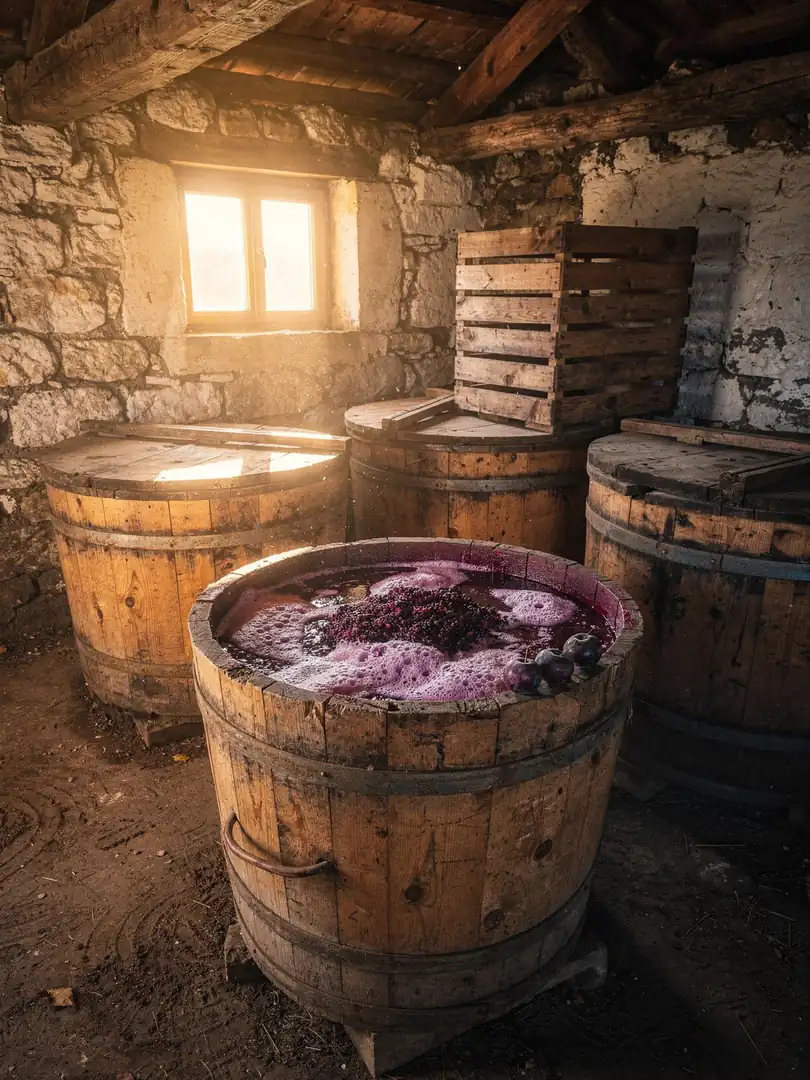
The mash then ferments for six to eight weeks in large vats. According to its description, Horincă de Cămârzana is fermented in wooden vessels, only rarely in stainless steel or plastic tanks. Air is the enemy of the mash: if oxygen gets in, the alcohol turns to vinegar.
In many villages, the yeasts do their work unaided. With Pălincă, fermentation begins naturally, driven by the wild yeasts already present on the fruit skins. The plum's sugar converts to alcohol, leaving behind a cloudy, tart, fruity mash that smells of fruit and yeast. Depending on the weather and variety, fermentation runs shorter or longer, and the distiller checks until no sugar remains.
This process also produces methanol, formed from the pectin in the fruit's cell walls rather than from poor distilling. Every fruit brandy therefore contains some methanol, which is why the EU sets an upper limit of 1,200 grams per hectoliter of pure alcohol for plum brandy. The real danger lies in adulterated alcohol cut with industrial methanol, not in a properly made spirit.
With Vinars, there's no fruit mash at all, since the base wine is already the finished product of fermentation. The wine is pressed and fermented like any other and only distilled afterward. Grape variety, vineyard site and vintage shape the brandy from the very start, whereas the fruit distiller controls the fermentation directly.