Batch by Batch
Distillation
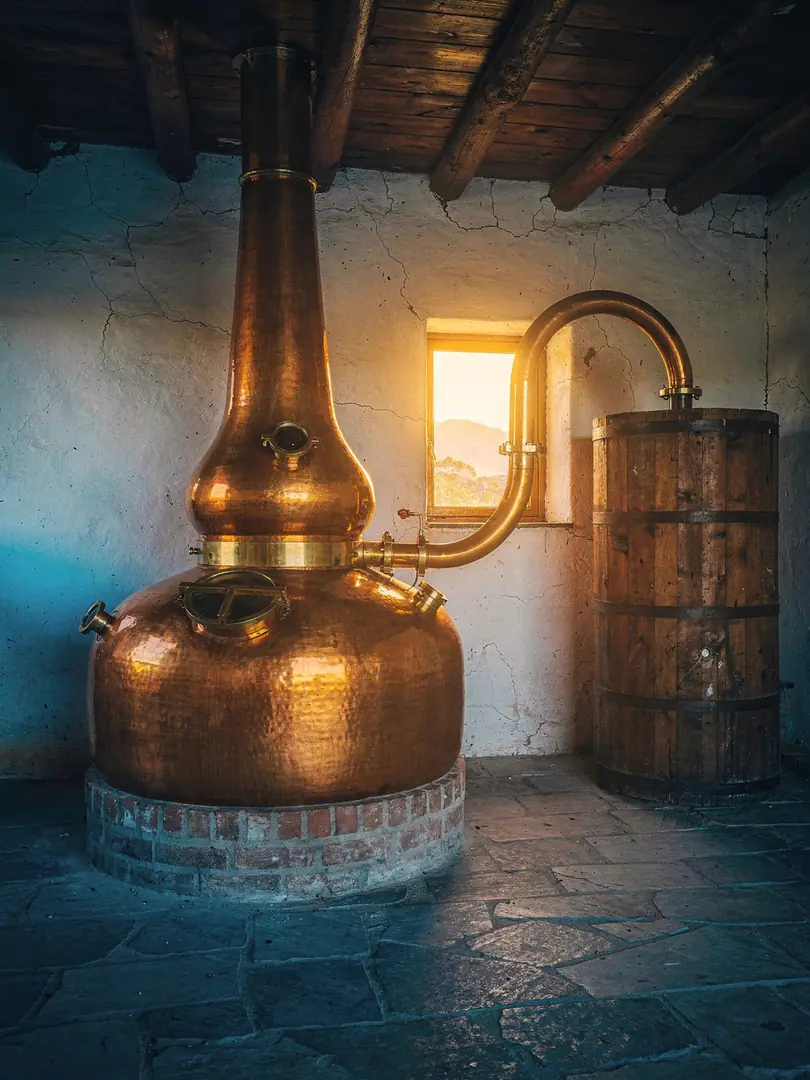
Chilean pisco is distilled in pot stills that work in batches. The decree requires alambiques de ciclo discontinuo, meaning apparatus with discontinuous operation. Picture it like a cooking pot that's emptied after every batch, not like a conveyor belt. A continuously running column still is therefore ruled out.
The stills are usually made of copper, which binds sulfur compounds and keeps the flavor clean. The wine is heated, the alcohol rises as vapor, and condenses back into liquid in a coiled tube. The result is a clear, colorless distillate.
Not everything that comes out of the still gets bottled. The distiller separates the heads, which smell sharp and contain volatile compounds, then takes the heart, the main run, and ends the distillation before the tails come through with their heavy, fatty notes. This selection determines how much aroma remains in the spirit.
The decree sets limits for this. Pisco must contain at least 2.0 grams of congeners per liter of pure alcohol and no more than 1.5 grams of volatile acids, while sugar must not exceed 5 grams per liter.
Freshly distilled, the alcohol content is well above what ends up in the bottle. It's reduced to drinking strength with water, which, unlike Peruvian pisco, is permitted in Chile. The distiller relies on smell, taste, and the strength of the distillate coming off the still.
Whether the spirit is distilled once or twice is left open by the decree. Pisco shares the batch process with Cognac, but not the requirement for double distillation. Anyone distilling pisco in Chile must be registered as a Destilador Pisquero with the SAG, and in Germany, distilling without a license is prohibited.