Apple, Pear, Medlar
Fruit & Raw Material
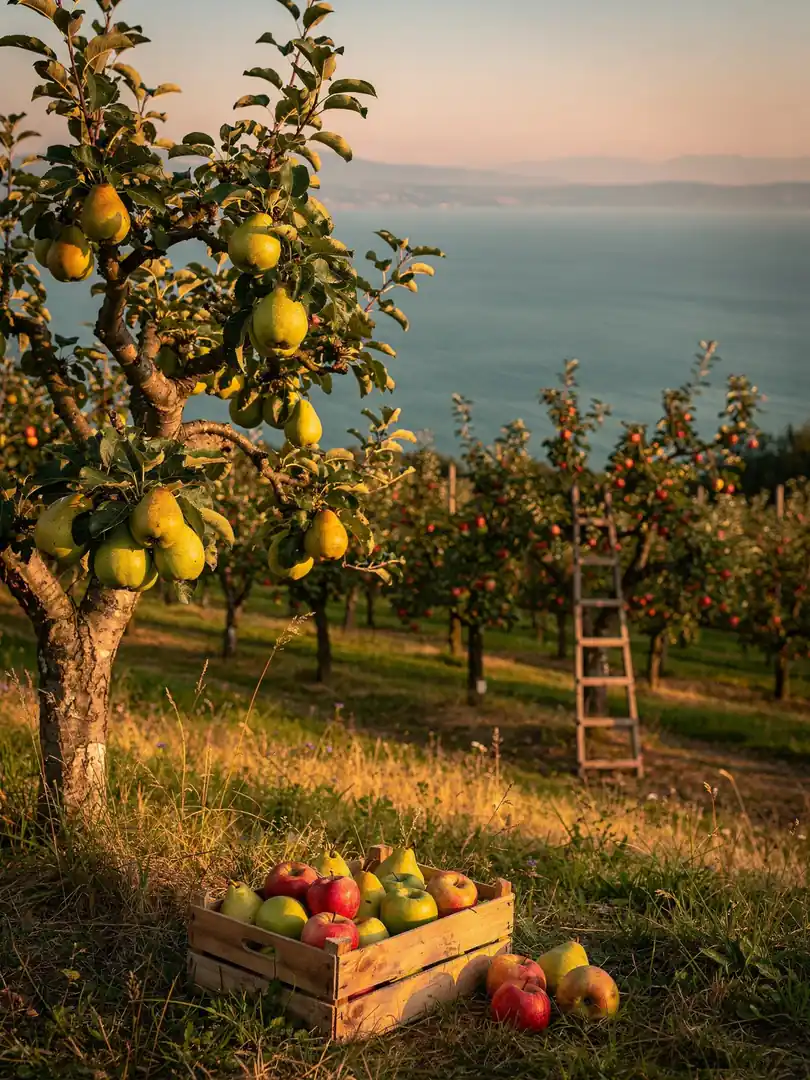
The Bodensee apple grown in the orchards is mainly Gala, Elstar, and Jonagold, and it's primarily a table fruit. Still, it works well for distilling. Distillers use cider apples or fruit that's too small, too blemished, or too ripe for packaging. What matters most is a high sugar content, since that sugar later becomes alcohol.
The most important pear for distilling is the Williams Christ. Only a spirit made exclusively from this variety may be called "Williams." The fruit ripens in late summer, has soft, juicy flesh, and a scent many describe as musky. It must go into the mash fully ripe, but it turns overripe quickly, so the harvest window stays short.
Besides apples and pears, unusual fruit also finds its way into the still in the Lindau district: quinces, mirabelles, and medlars, an old fruit that only turns soft and sweet after the first frost. It's precisely these outsiders that give the small distilleries along the shore their distinct character.
The abundance of fruit here is thanks to the lake. The large body of water stores summer warmth and releases it in autumn, and it also tempers spring frosts, which can destroy the blossom entirely. Where frost still threatens, growers protect the blossoms with sprinkler irrigation, and nets keep hail at bay.
What the orchards of the future might look like is being researched at the Kompetenzzentrum Obstbau Bodensee in Bavendorf near Ravensburg, among other things with a photovoltaic system mounted above the trees that's also meant to shield them from hail and heavy rain.
A blending rule applies to Obstler: at least 85 percent of the mash must come from apples, pears, or both, while up to 15 percent may come from other fruits or berries. This very flexibility makes it the all-rounder of farmhouse distilling, since whatever ripens in the garden can be put to use.