Standard Trees and Sweet Cherries
Fruit & Raw Material
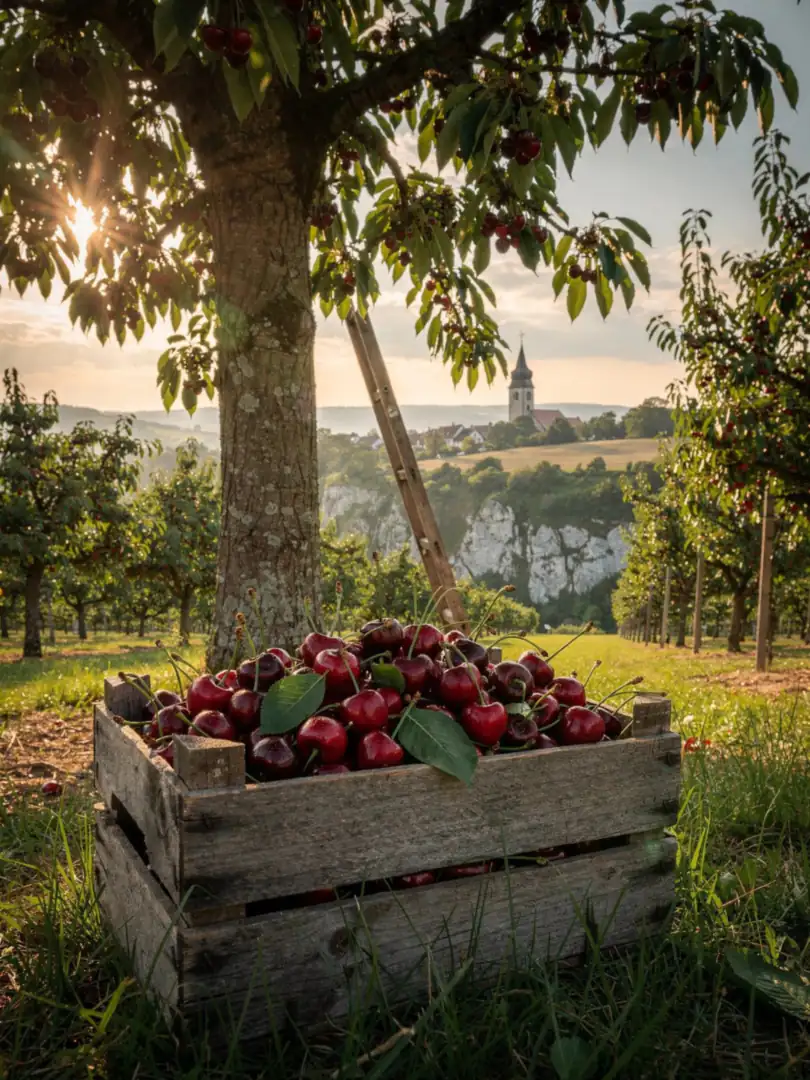
Tall sweet cherry trees define the hillsides around Pretzfeld, and that's what sets them apart from any orchard plantation: the trunks stand high, the crowns spread wide, and harvesting is done from long ladders. Such standard, high-stemmed trees are found above all in the Forchheim district and throughout Franconian Switzerland.
The Pretzfeld Cherry Trail winds through the area for about nine to ten kilometers, with 15 information boards explaining the cultivation, nature, and history of the region. The blossom lasts only a few weeks, usually falling between late March and mid-April. If it comes too early and a frost follows, the effect shows up in the summer harvest.
The fruit ripens in summer, and for the distiller, sugar content is what matters most. The fruit sugar the cherry brings with it is later converted by yeast into alcohol, while the aroma from skin and flesh survives the distillation process. The riper and healthier the fruit, the cleaner the mash turns out, since rotten or damaged fruit introduces unwanted off-notes.
The pit also plays its part. It stays in the mash during Kirschwasser production because it lends a subtle note of bitter almond—and for that, it needs to remain as intact as possible. The protected designation requires that the cherries themselves come from Franconia.
Kirschwasser, by the way, is not a diluted spirit. The word Wasser appears in EU regulation as a permitted alternative to Brand (brandy), meaning Kirschwasser is legally identical to Kirschbrand. The shortened form Kirsch is also allowed and refers specifically to spirits distilled from sweet cherries.