Fermenting, Not Steeping
Mash & Fermentation
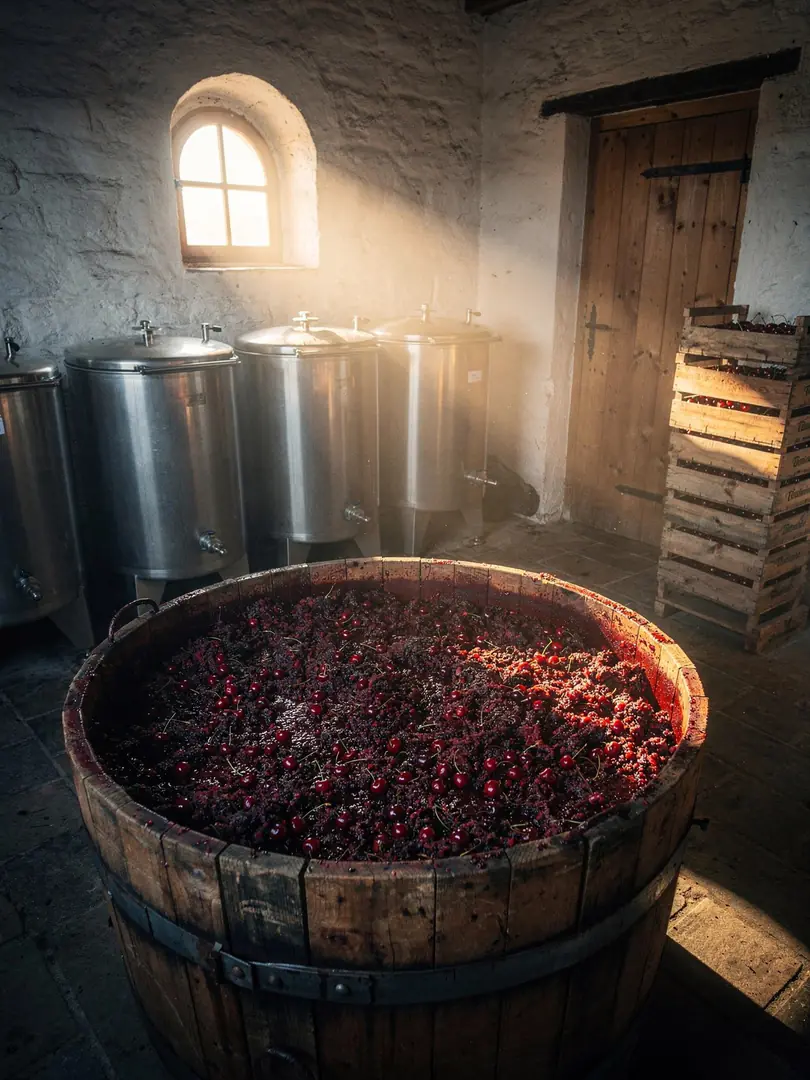
Right after harvest, the cherries from the Trubachtal go straight into the mash, since ripe sweet cherries spoil quickly. They're crushed, with the pits meant to stay as whole as possible. Crushed pits release hydrocyanic acid, which over time and exposure to light turns into ethyl carbamate. A subtle note from the pit is desirable—too much becomes both a flaw and a health risk. For stone fruit spirits, the EU sets a limit of 7 grams of hydrocyanic acid per hectoliter of pure alcohol.
Yeast takes over from there, converting the cherries' sugar into alcohol and carbon dioxide. The mash is often acidified and sealed airtight to keep out unwanted microbes and oxygen. What results is an alcoholic mash of a few percent by volume that smells of cherry but isn't yet a spirit.
This is exactly where the distinction between Obstbrand (fruit brandy) and Obstgeist (fruit spirit) lies. Kirschwasser is a fruit brandy: the fruit is fermented, the mash distilled, with no outside alcohol added. An Obstgeist, by contrast, is made from unfermented fruit steeped in neutral alcohol and then distilled, as with raspberry spirit (Himbeergeist). That's a different method entirely, not a mark of lesser quality—it simply suits fruits that lack enough sugar to ferment well. Cherries ferment easily and don't need that detour.
Methanol is also tied to the mash. It originates from the pectin in the fruit's cell walls and forms right there, not later in the still. That's why legal maximum limits exist—for cherry brandy, the ceiling sits at 1,000 grams per hectoliter of pure alcohol. Anyone drinking legally produced fruit brandy stays well under these limits. The real danger lies in adulterated alcohol, and a Fränkisches Kirschwasser from a licensed distillery in Pretzfeld or one of the neighboring villages is nowhere near that risk.